

Functional medicine, concierge, and longevity practices sell something that is hard to see: gradual, multi-system improvement over months. Patients/clients often pay out of pocket and have to decide, at every renewal, whether it was worth it. If they can't see their progress, they tend to fill the gap with how they feel that week.
Most practices do produce results. The trouble is showing them. Data is spread across lab PDFs, wearable apps, and visit notes, and progress gets explained in stories instead of evidence. This guide covers a practical approach to functional medicine outcomes tracking: what to measure, how to structure it, how to share it with patients, and how the same evidence can support retention and referrals without overpromising.

Why outcomes tracking is a business issue, not just a clinical one
Clinically, tracking outcomes tells you whether a protocol is working for a given patient and when to adjust. Operationally, it tells you which programs and interventions consistently deliver. Commercially, it gives patients a clear reason to renew and something concrete to share with friends and family.
These three uses depend on the same foundation: consistent, structured data captured over time. Get that right and the rest becomes much easier.
01
Define what "better" means before the program starts
You can't show progress against a goal you never recorded. Start every patient engagement by setting a baseline and agreeing on goals.
Pick a small set of outcome measures per program
For each program, choose a handful of measures that reflect what the program is designed to change. Mix three types:
- Objective biomarkers: the lab markers relevant to your protocol, plus device data such as glucose trends, blood pressure, weight and body composition, sleep, resting heart rate, and HRV.
- Patient-reported outcomes: symptom scores, energy, mood, sleep quality, or validated questionnaires you already use.
- Behavioral and adherence measures: protocol adherence, supplement and medication use, activity, nutrition logging, and visit attendance.
Objective markers make results credible. Patient-reported outcomes make them meaningful to the patient. Adherence data helps you interpret both.
Record the baseline properly
Capture baseline labs, device data, and questionnaires before the intervention begins, and note the date. If wearables are part of the program, try to get a couple of weeks of baseline data, so you're comparing against a typical period rather than a single day.
Agree on goals with the patient
Write down two or three goals in the patient's own words alongside the measurable targets. "Sleep through the night" or "stop the afternoon crash" is what they'll remember at renewal time. Linking those goals to measurable data makes progress concrete.
02
Track at three levels
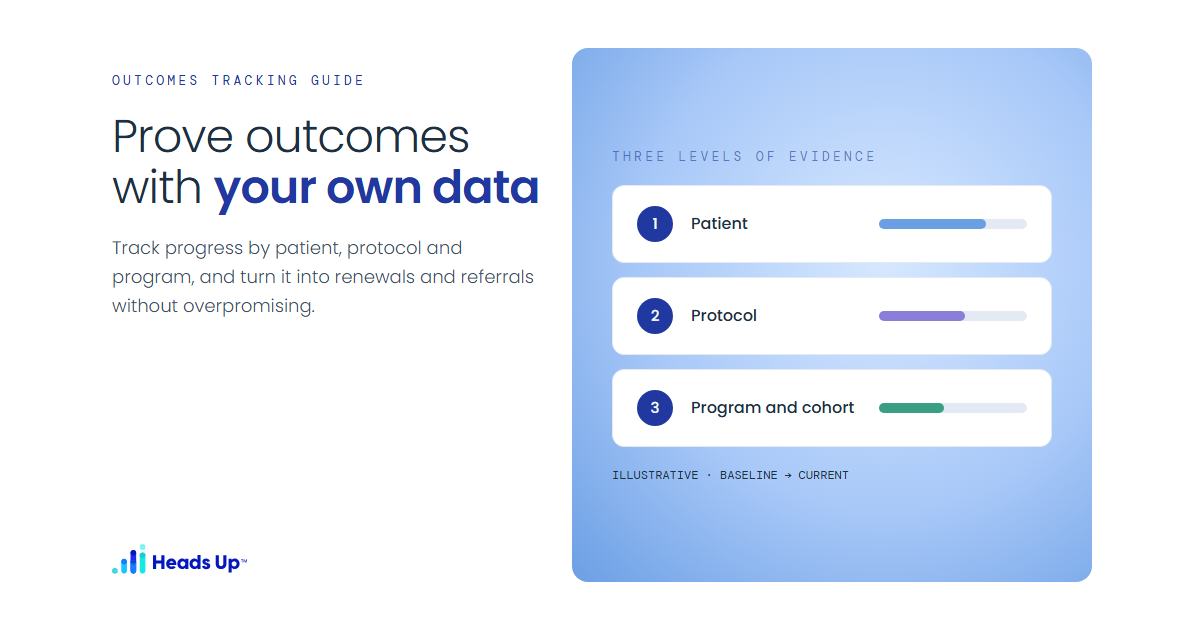
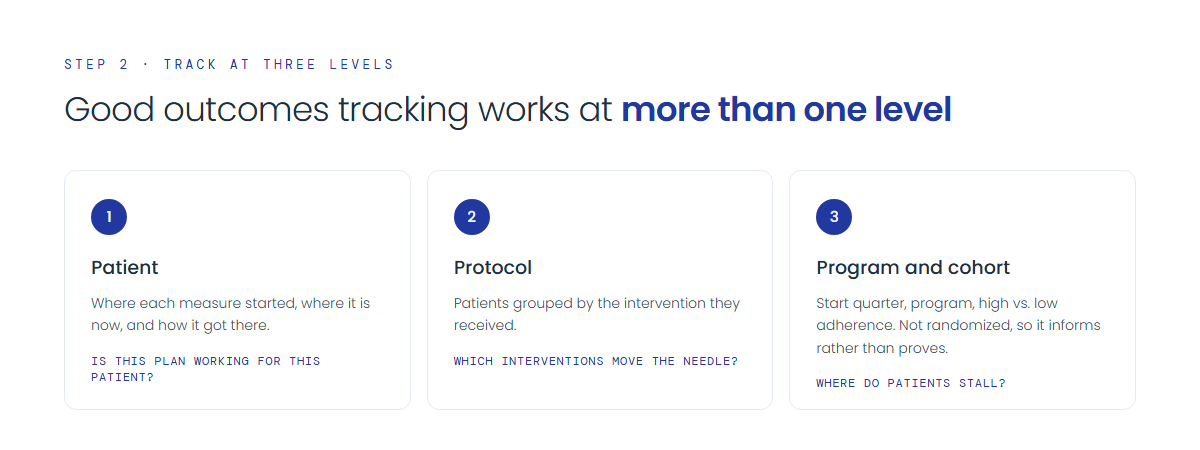
Good outcomes tracking works at more than one level.
Patient level
This is the individual trajectory: where each measure started, where it is now, and how it got there. Review it at every visit, and before each visit, so you walk in knowing what changed since the last one.
Protocol level
Group patients by the protocol or intervention they received. Are most patients on a given protocol moving in the expected direction? Where do they stall? This is where you learn which interventions are actually moving the needle in your practice.
Program and cohort level
Compare cohorts, such as patients who started in different quarters, different program tiers, or patients with high vs. low adherence. Cohort comparisons help you refine programs, set realistic expectations with new patients, and spot where you need more support.
Be careful how you interpret cohort comparisons. In a clinical practice, groups aren't randomized, and differences can reflect who chose which program as much as the program itself. Use these comparisons to improve your services, not as proof of efficacy.
03
Turn data into progress reports patients understand
Raw data rarely persuades anyone. A clear, visual progress report does.
What a useful progress report includes
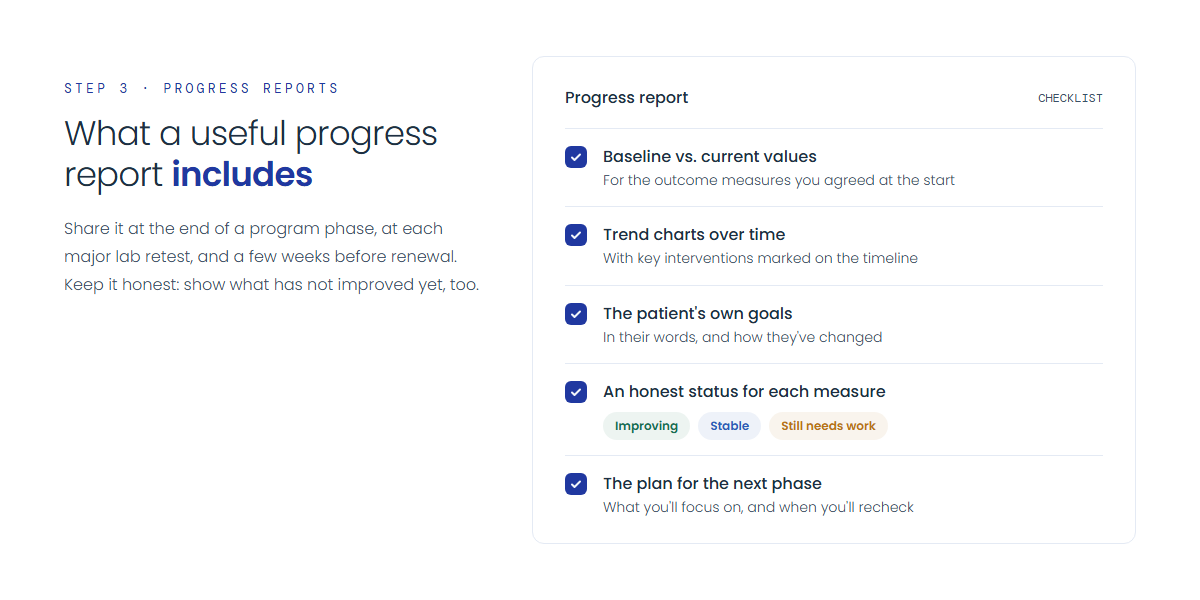
- Baseline vs. current values for the agreed outcome measures
- Trend charts over time, with key interventions marked on the timeline
- The patient's stated goals and how they've changed
- What's improving, what's stable, and what still needs work
- The plan for the next phase
When to share it
Build reports into the patient journey: at the end of an initial program phase, at each major lab retest, and ahead of renewal conversations. A progress review a few weeks before a membership renews gives both of you a natural, evidence-based conversation about next steps.
Keep it honest
Show areas that haven't improved, too. Patients trust a report that acknowledges what's still in progress, and it gives you a clear reason to continue care.
04
Use outcomes to support renewals and referrals ethically
Outcomes data can strengthen the practice, but it has to be handled carefully.
For renewals: Frame the conversation around the patient's own data and goals. "Here's where you started, here's where you are, here's what we'd focus on next" is far more effective than a generic pitch.
For referrals: Patients who can show a clear report to a spouse or friend often explain your work better than any brochure. Make reports easy to understand and, with patient permission, easy to share.
For marketing: If you use aggregated outcomes publicly, de-identify data, get the necessary consents, avoid cherry-picking, and describe results accurately. Don't present practice data as clinical evidence or imply guaranteed results. Check with your compliance advisor on what's appropriate in your jurisdiction.
Common pitfalls in functional medicine outcomes tracking
No baseline. Without pre-intervention data, you can't show change. Make baseline capture non-negotiable at onboarding.
Too many metrics. Tracking forty markers for every patient makes reports confusing and reviews slow. Focus on the measures tied to each program's goals.
Inconsistent measurement. Different labs, different times of day, different devices, and gaps in wearable data can all create false trends. Standardize where you can and note changes when you can't.
Manual reporting. If building a progress report takes an hour in a spreadsheet or slide deck, it won't happen consistently. Reporting needs to be close to automatic.
Only looking at outcomes at renewal time. Waiting until the end of a program to check data means you miss chances to adjust the care plan at each visit, and you only learn about dropped adherence when the patient is deciding whether to renew.
How Heads Up supports outcomes tracking
Doing all of this manually is possible but hard to sustain as a practice grows. Heads Up is a HIPAA-compliant clinical intelligence platform built for concierge, longevity, integrative, and functional medicine practices, and outcomes tracking is one of its core uses.

Because Heads Up brings labs, wearables, CGM, body composition, medical devices, and EHR data into one longitudinal record for each patient or client, the baseline and follow-up data you need for outcomes tracking already live in one place. From there, practices can:
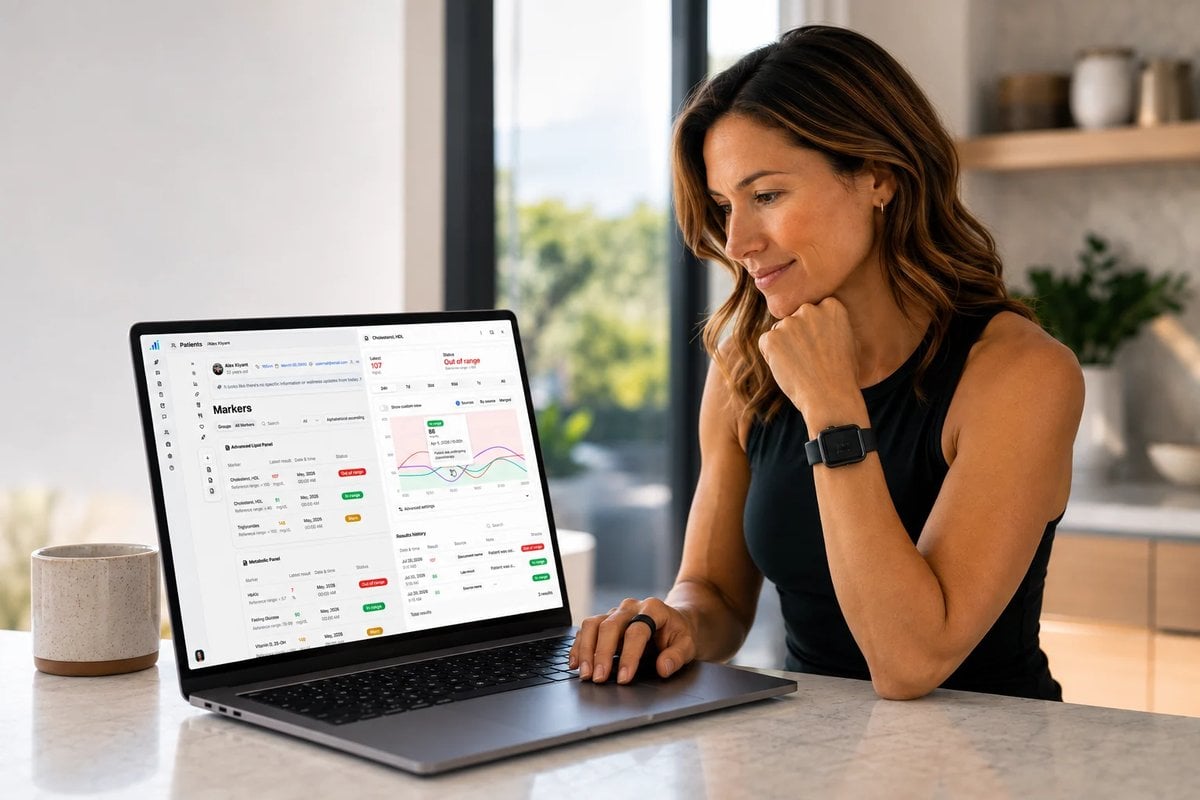
- See each patient's trajectory against their baseline, with lab results and device trends on one timeline, so every visit starts from what changed since the last one.
- Walk into each visit with a Pre-Visit Intelligence briefing that summarizes what changed since the last appointment and prioritizes items as Critical, Monitor, or Positive progress. The clinician reviews it and decides what to act on.
- Structure each program with Programs: one-time and recurring Medication or Supplement, Lab, Education, and Note or Assessment tasks, with an Enrollments table showing each patient's adherence and status. Programs tell clients what to do next between visits, and adherence data helps you interpret their outcomes.
- Group patients into cohorts (for example, by age and sex) with their own reference ranges, so results are judged against the standard that fits that population.
- Ask natural-language questions across a patient's data with the built-in AI assistant.
Patients can also use the Mobile Wellness Companion to log symptoms, mood, and other context alongside their objective data, which fills in the patient-reported side of outcomes. See the product overview for details, or browse case studies from practices using the platform.
Getting started
Start small. Choose one program, define its outcome measures, set up baseline capture, and schedule a progress review before the next renewal cycle. Once the process works for one program, extend it to the rest.
If you'd like to see what outcomes tracking and progress reporting look like with your own program structure, request a demo of Heads Up.
See how clinics use Heads Up
Unify labs, wearables and EHR data into one AI-assisted view. Book a walkthrough tailored to your practice.


