

Updated October 2026: refreshed the guidance on carbohydrate targets, lipids and thyroid markers, added medication safety notes for practitioners, replaced discontinued products and affiliate links, and fixed broken links.
In this post we look at how to help clients navigate the challenges of starting and maintaining a ketogenic diet, and how Heads Up Health can help you track their progress, fine-tune the approach and find exactly what works for each individual body as they adopt a low-carb ketogenic lifestyle. Along the way, I share examples from my own experience going keto.
Read on for our "Five Steps to Jumpstart the Ketogenic Diet."
Before You Start: A Safety Note for Practitioners
A very low-carbohydrate eating plan can cause diuresis and lower blood glucose quickly. The American Diabetes Association's nutrition consensus report advises that patients have support from a knowledgeable practitioner at the start, both to prevent dehydration and to reduce insulin and other glucose-lowering medications to prevent hypoglycemia. Blood pressure medications may also need review. For patients taking SGLT2 inhibitors, the prescribing information lists a ketogenic diet among the precipitating factors for ketoacidosis, so review these medications before a client starts.
Step 1: Master Your Macronutrients (Protein, Fat & Carbs)
The hardest part about going keto, especially for beginners, is learning how to adjust food intake to meet the requirements of a ketogenic diet. The ketogenic diet is a very low-carbohydrate diet: plans typically aim for 20 to 50 grams of non-fiber carbohydrate per day to induce nutritional ketosis. The rest of the daily calories come from protein and fat, and the exact amounts of each depend on the client's goals (muscle building, fat loss, endurance athletics, disease management etc.).
For clients who have never counted calories or read food labels before, learning how to correctly adjust their diet can be tricky at first. Start by calculating target protein, fat, carb and calorie goals with a macronutrient calculator designed for ketogenic diets. We've included a few good calculators in the appendix.
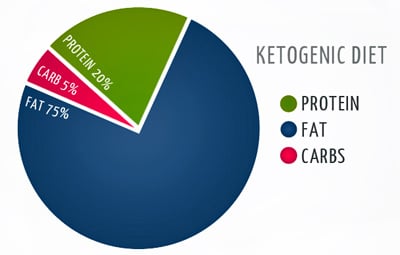
Macronutrient ratios for ketogenic diet
- Example: When I first came off the Standard American Diet and started keto for general weight loss, I set a goal of 80% fat, 15% protein and 5% carbs. It took a few weeks of trial and error to learn which foods I could eat to reach my goals, but it got easier with practice. Over the course of about six months my weight dropped from 197 pounds to 184 pounds and my body fat dropped from 24% to 20%. Overall I was very pleased with these initial results.
Once a client is comfortable with the general low-carb diet, results can be further optimized by measuring macronutrients in grams. This is a much more accurate method and allows you to refine caloric intake based on age, sex, body type and activity level. You can also tailor caloric intake to the client's own metabolic characteristics and specific health objectives on keto (weight loss, diabetes management, muscle growth etc.).
- Example: After losing a good amount of weight during my first six months on keto, I wanted to shift focus from losing weight to building muscle. I used the Ketogains calculator (Ketogains is now Metabolic Mastery) and shifted to a daily goal of 1,600 calories consisting of 124 grams of fat, 100 grams of protein and 20 grams of carbs, and shifted my exercise routine from cardio to strength training with weights.
Once the macros are calculated, we recommend an app like MyFitnessPal, Cronometer or MyMacros+ to track daily food intake and confirm adherence to daily goals for calories and macronutrients. Here are the recommended steps to use MyFitnessPal to fine-tune macronutrient intake:
1a. Install MyFitnessPal on a smartphone or computer.
1b. Change the app settings so the daily macronutrient goals are appropriate for a ketogenic diet based on the client's goals. The image below shows how to change goal settings in an earlier version of the iOS app:
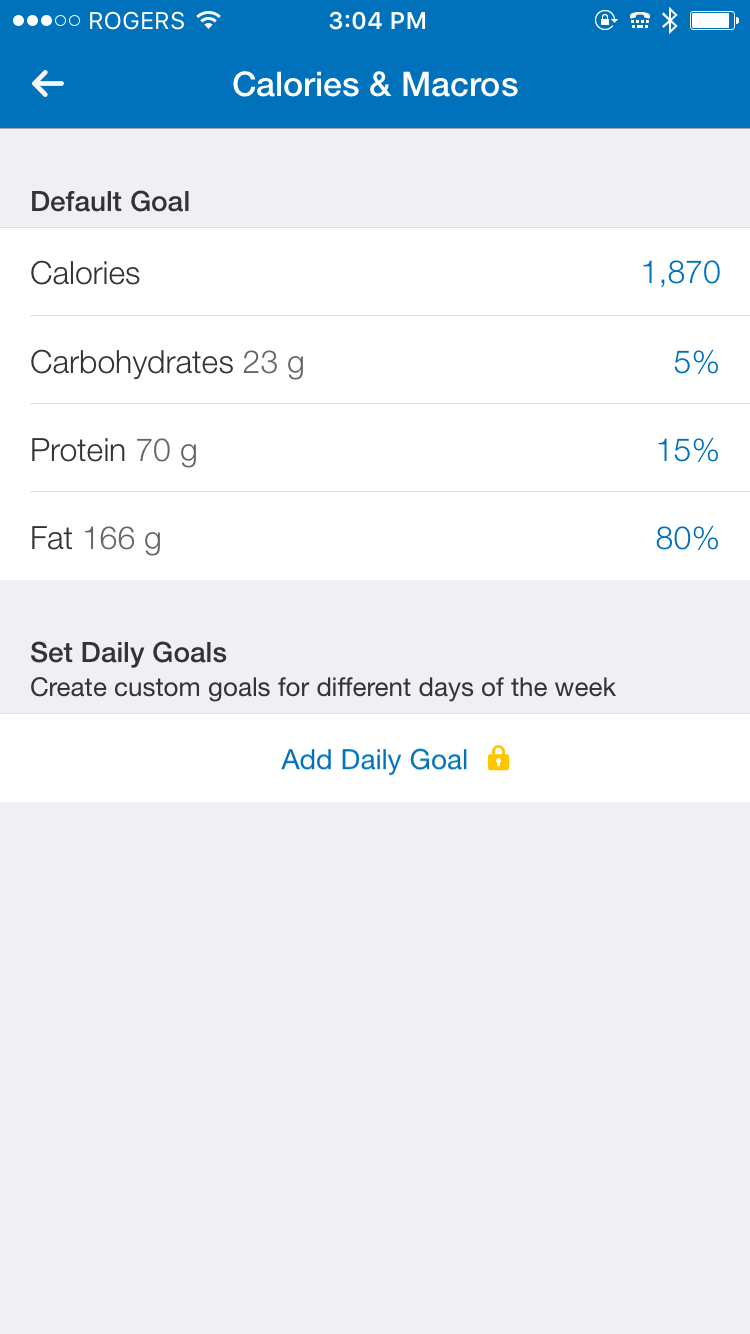
Changing MyFitnessPal goal settings on the iOS app
1c. Log everything eaten throughout the day. For packaged foods that have a barcode, use the app's barcode scanner to import the macronutrient data.
1d. Check progress regularly throughout the day to stay on track with macronutrient goals and adjust food intake accordingly. The image below shows how to check progress in the app against target ratios:
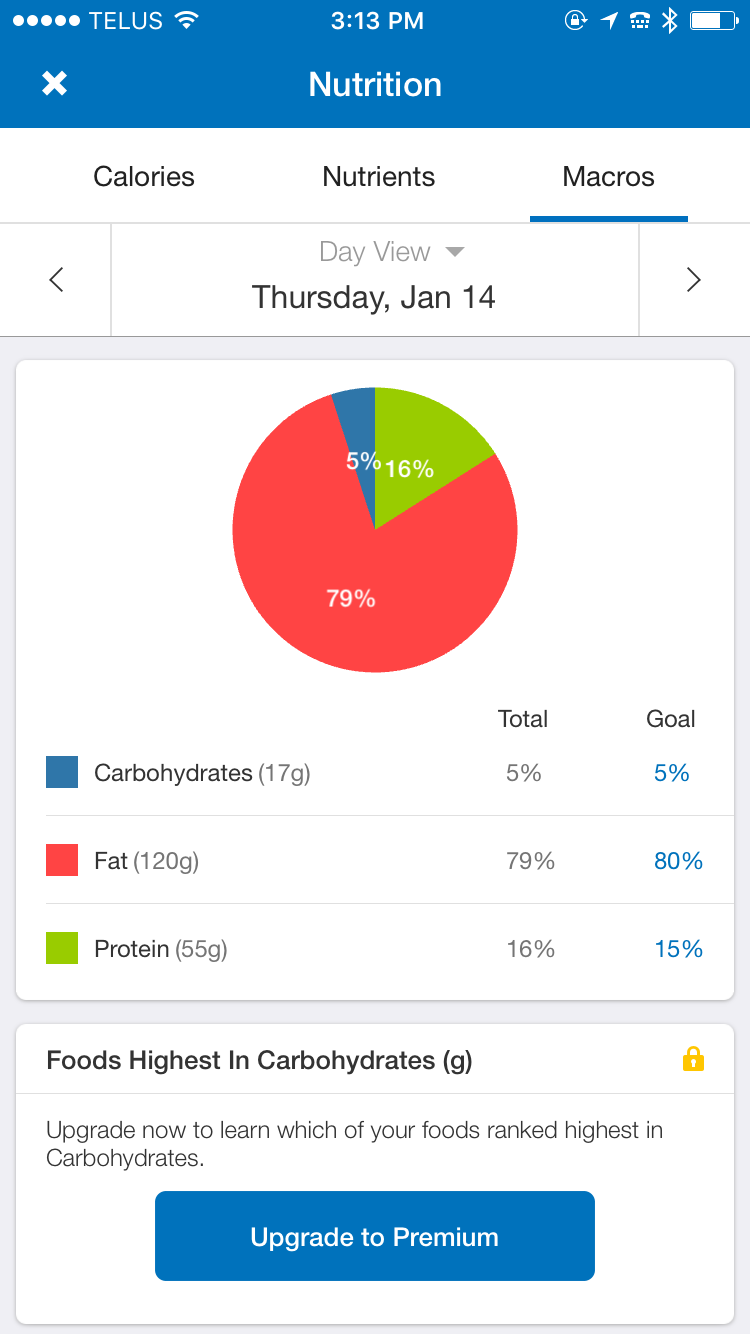
Check your progress in the MFP app
1e. Lastly, connect the client's MyFitnessPal account to Heads Up so you can see nutrition data alongside everything else covered in the rest of this post. For example, in the graph below I am comparing my daily fat intake (measured by MyFitnessPal) with my daily blood sugar readings (entered manually).
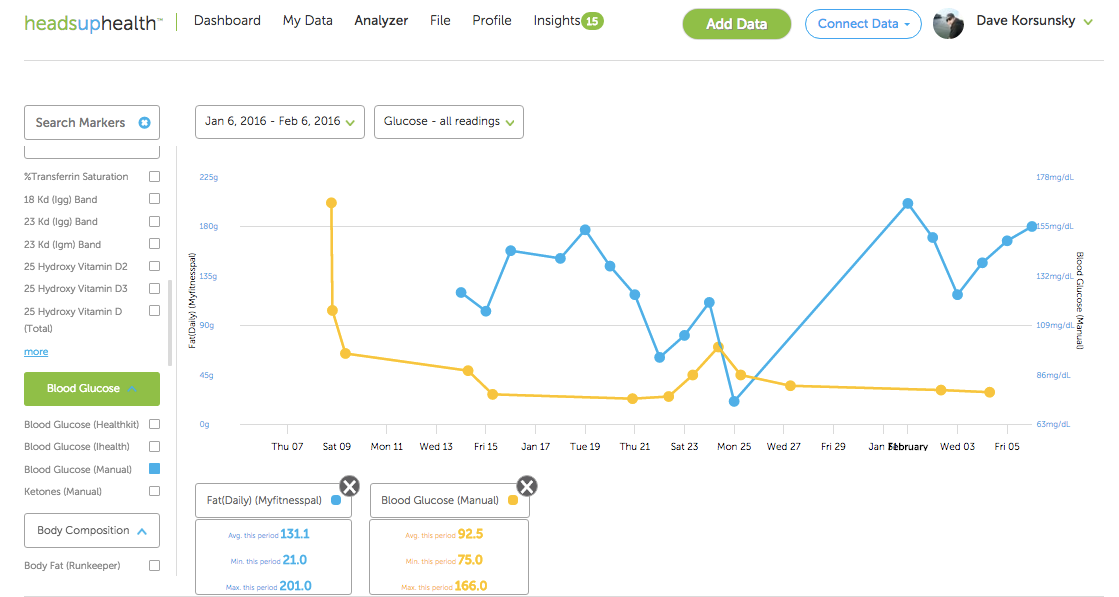
Correlating fat intake with fasting blood glucose
This takes some work up front, but it's a very educational exercise. After a couple of weeks, most people have the hang of it and eating to target macronutrients becomes fairly intuitive. As clients become more advanced with the ketogenic diet, they may revisit their macros and tweak them to suit their body and specific health goals.
Learning how to properly calculate and track macronutrients is essential on keto, so it's worth investing time in this skill. There are many online ketogenic communities that can help answer questions (see appendix), and a coach or practitioner working with the client directly can help when the online communities feel overwhelming.
Step 2: Balance Your Blood Sugar
In addition to a nutrition app, a glucometer is another very important tool in the keto toolkit. We recommend the Keto-Mojo glucose and ketone meter, an affordable dual-function meter (glucose and ketones). It syncs with Heads Up, so you can monitor a client's glucose and ketone readings next to all their other health metrics, which is important for tracking progress and fine-tuning keto for each client's goals.
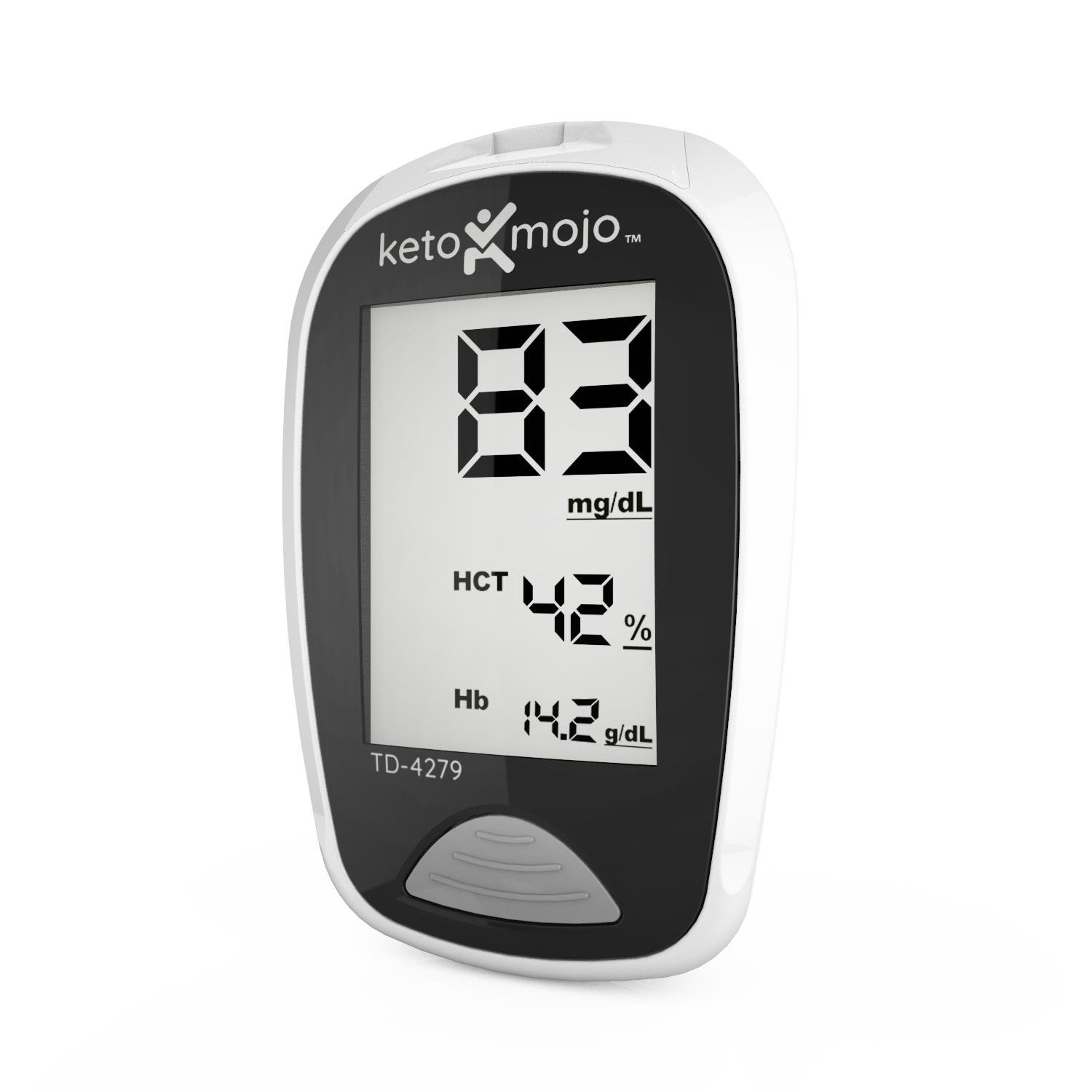
Keto-Mojo Glucose and Ketone Meter
There are a few important areas to pay attention to when tracking blood sugar on keto:
- Fasting blood sugar: "Fasting" blood sugar is measured after no food or drink (except water) for at least 8 hours, usually first thing in the morning. A fasting plasma glucose below 100 mg/dL is considered normal. Fasting blood sugar often drops as carbohydrate intake falls, which can be one of the first signs that the body is moving toward ketosis.
- Example: When I am not following a low-carb, high-fat ketogenic diet (i.e. eating whatever I want), my fasting blood sugar typically ranges between 95 and 100 mg/dL (5.3 to 5.6 mmol/L). When I am following a keto diet, my fasting blood sugar is typically between 80 and 85 mg/dL (4.4 to 4.7 mmol/L). I've gotten to know my body well enough that after about three consecutive days of fasting readings between 80 and 85 mg/dL, I expect to be in ketosis and will measure my ketone levels to confirm (more on that later).
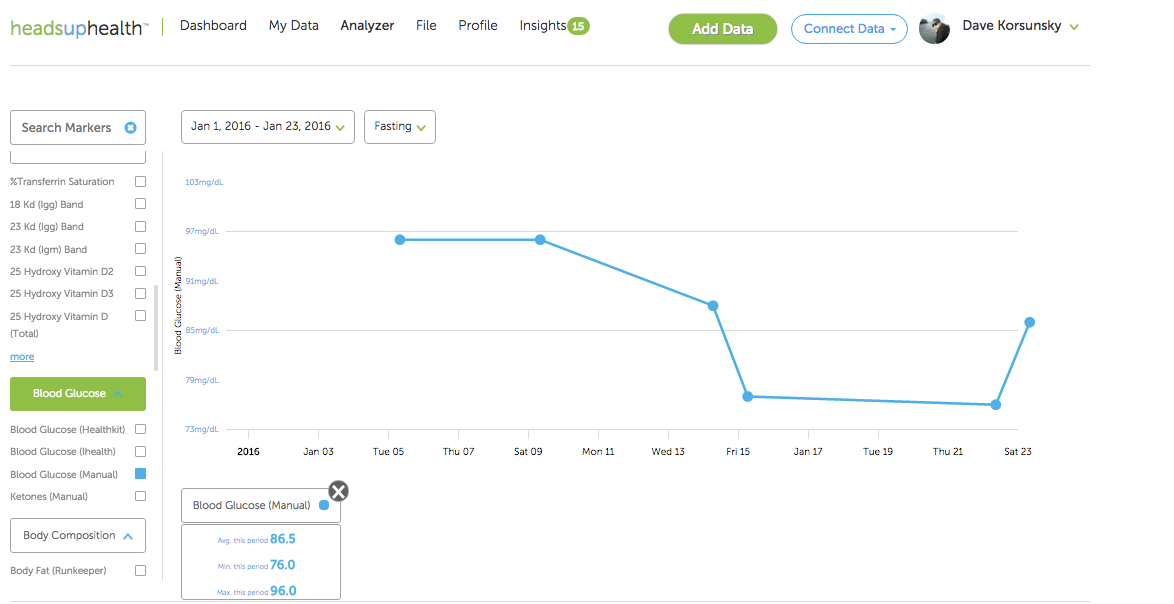
Fasting glucose decreasing as you reach ketosis
- Post-prandial blood sugar: "Post-prandial" simply means a blood sugar reading taken after a meal. A goal on keto is to keep blood sugar low, thereby minimizing the insulin response. If you aren't sure how a client responds to a certain meal, have them test one, two and three hours after eating. For reference, a 2-hour value below 140 mg/dL (7.8 mmol/L) on an oral glucose tolerance test is considered normal. Dietary fat has a much smaller immediate effect on blood sugar than carbohydrate, which is part of the reason a low-carb, high-fat diet can keep people feeling full while minimizing the blood sugar response.
In addition to Keto-Mojo, Heads Up integrates with continuous glucose monitors such as Dexcom and FreeStyle Libre, which show the full post-meal glucose curve rather than single fingersticks. In March 2024 the FDA cleared the first over-the-counter CGM, Dexcom Stelo, for adults who do not use insulin; see our post on CGM for non-diabetics. Heads Up can also pull in glucose readings from apps that write data to Apple Health, or clients can enter readings manually. Manual entries let clients add more detail with each reading, and those contextual details can be as important as the reading itself.
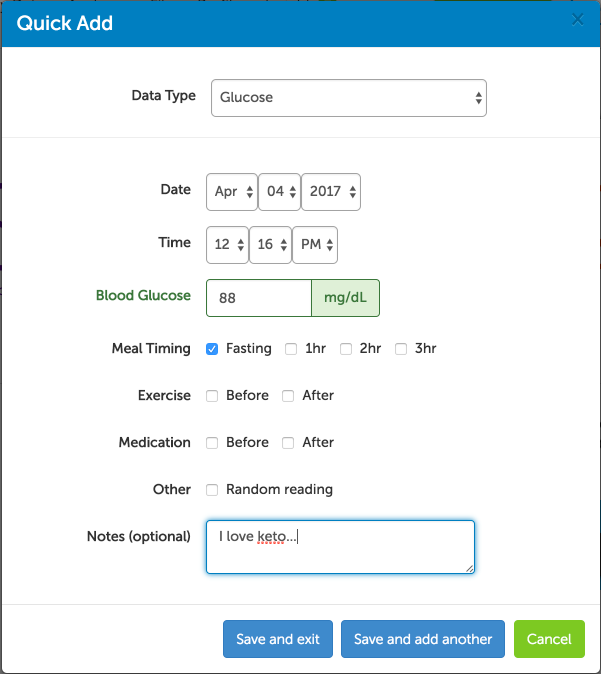
Kickin' it old school with manual glucose entries
Step 3: Beat Down Body Composition
Weighing every few days is another important monitor. A very low-carbohydrate diet causes a diuretic effect, and depleting stored glycogen (which is stored with water) also lowers weight, so early weight loss in the first weeks of keto is partly fluid. This is why it is important to hydrate with fluids and electrolytes and keep an eye on the scale, especially during the early stages of keto.
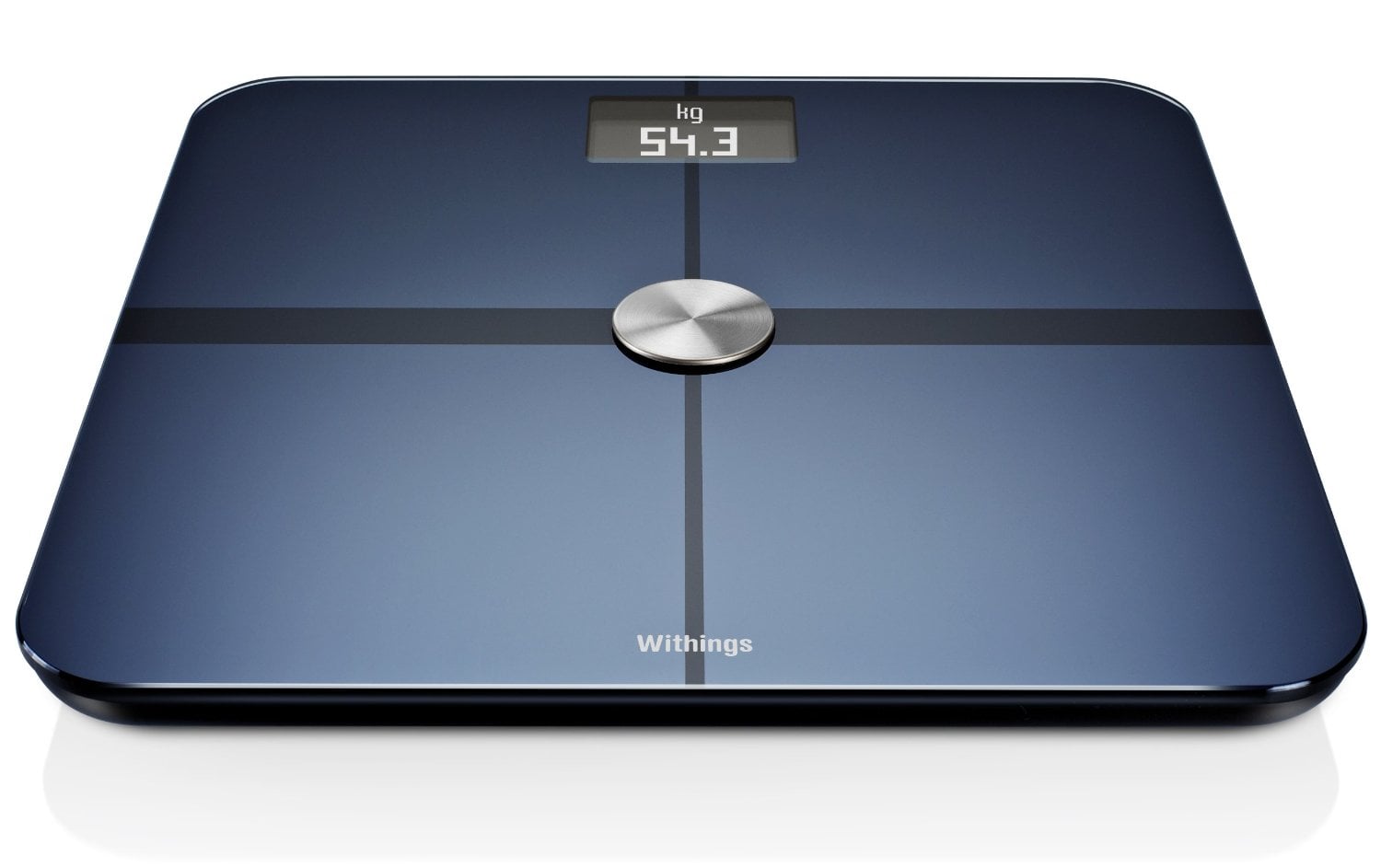
Track body composition while on the ketogenic diet
Once the body's mineral and fluid levels have had a chance to adapt to the new diet, fat loss can begin in earnest. By keeping blood sugar low through a low-carb, high-fat diet and minimizing the insulin response, we shift the body's metabolism toward burning fat instead of storing fat. Lean mass can still be lost on any weight loss diet, though, which is why tracking body composition matters.
It is important to track BOTH weight AND body fat on keto. If the weight number isn't moving down but the body fat number is, the client is on the right track: lean mass is being maintained while fat mass goes down. Clothing often starts to fit better, even when total scale weight is not moving as fast as they'd like.
Heads Up can automatically connect to wireless scales from Withings, Fitbit and more, and can import weight readings from Apple Health. Clients can also enter data manually from any scale.
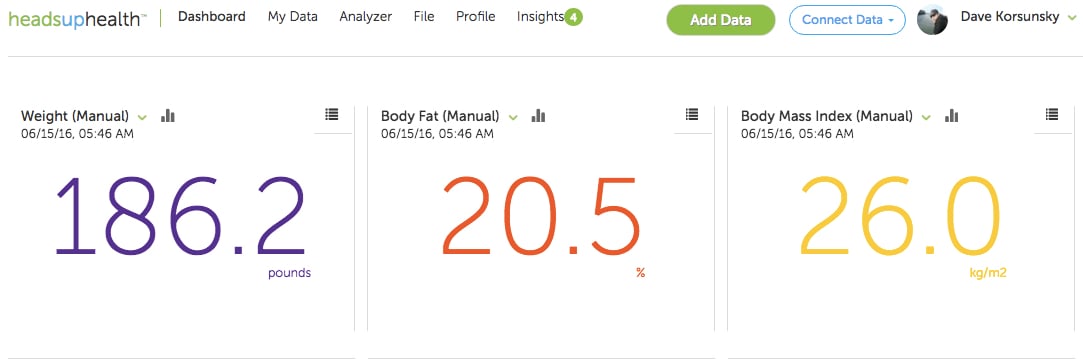
Track your body composition on ketogenic diet
Home scales have limitations as a measure of body composition, but the data can still be a helpful guide. For more precise body composition testing, consider periodic DEXA scans, which also report regional lean mass such as the appendicular lean mass index. For example, I personally use a body fat scale at home for daily readings and supplement this with twice-yearly DEXA scans.
Lastly, you may also want to track body measurements. In many cases, scale weight may not be moving as fast as a client would like (they may even gain weight as they build muscle and lose fat), but body composition is improving. Body tape measurements can be tracked in Heads Up as well.
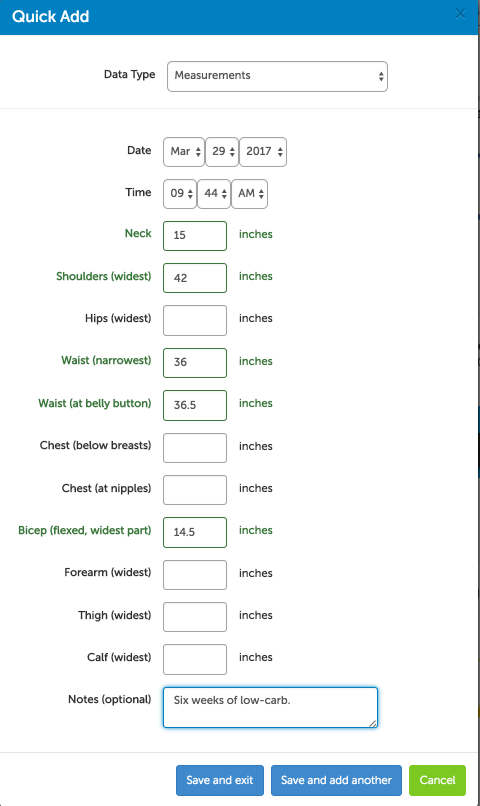
Body tape measurements with Heads Up Health
Step 4: Time to Test the Ketones
So now the client has dialed in their macronutrients with MyFitnessPal (or whichever nutrition app they prefer), fasting blood sugar readings have come down as carbohydrates were restricted, and weight is starting to come down on the scale. The next step is to test ketone levels to confirm the body is entering ketosis.
There is a big difference between just eating a low-carb, high-fat ketogenic diet and actually being in a state of ketosis verified with ketone testing. This is an important distinction to understand, especially for beginners.
There are three methods for testing ketones:
4a. Blood ketones: This is considered the most accurate method. Just like testing blood sugar, it uses a drop of blood from a finger stick. Nutritional ketosis is generally considered to be a blood beta-hydroxybutyrate level of 0.5 to 3.0 mmol/L.
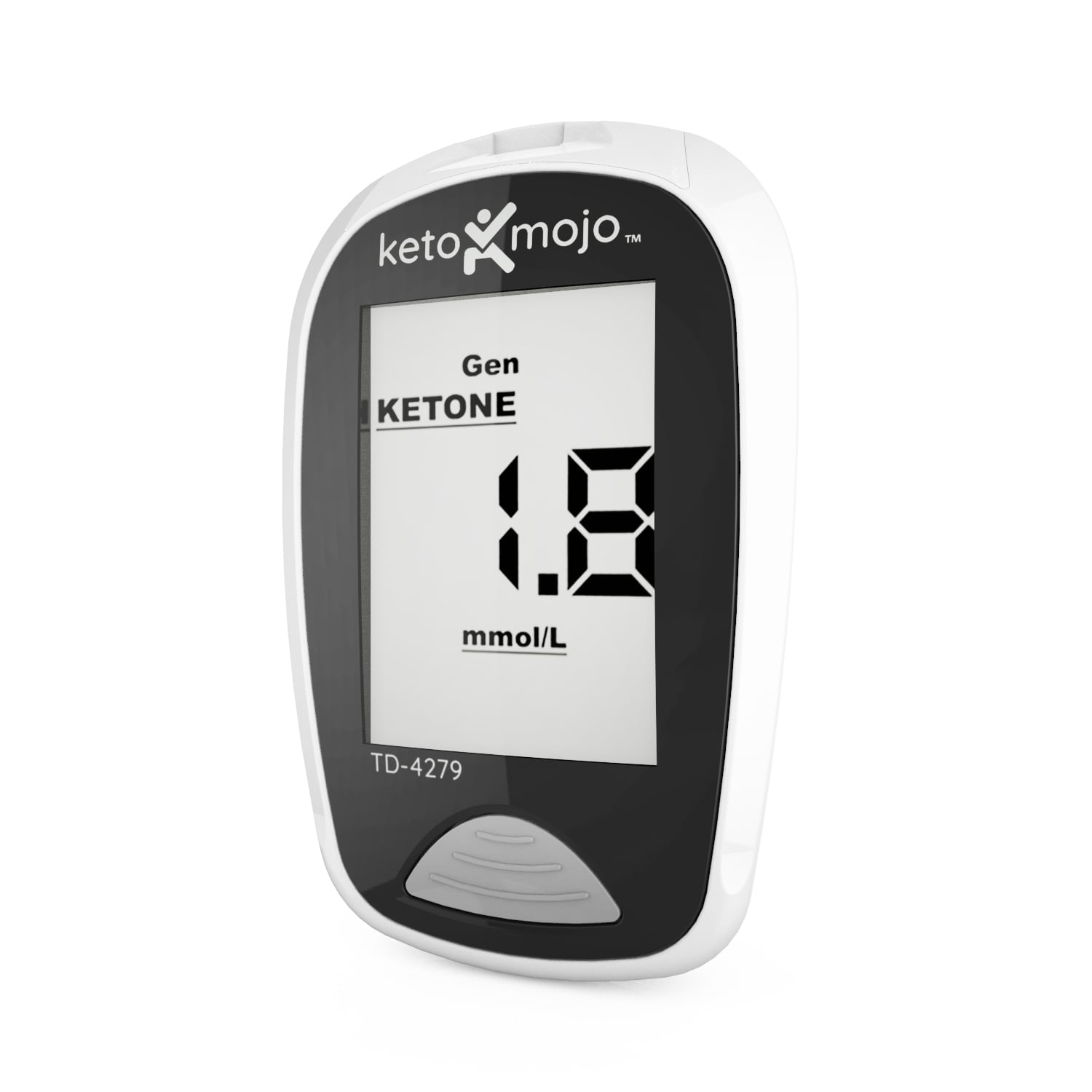
Keto-Mojo dual-function glucose and ketone meter
4b. Breath ketones: This method can be more affordable over time because it does not require test strips. Devices like the Ketonix breath ketone meter provide a reusable way to test.
4c. Urine ketones: This is the most basic method, yet it works for many people and the test strips are relatively inexpensive. It is a reasonable place for beginners to start, moving to blood or breath testing if their needs (and budget) permit.

Urine ketone test strips
Some people enter ketosis within a few days of following a low-carb, high-fat ketogenic diet. For others, it may take weeks of trial and error. A lot depends on the person's metabolic health.
Testing ketone levels can be a very helpful piece of biofeedback while learning the ketogenic diet. Heads Up supports all three methods (blood, breath and urine).
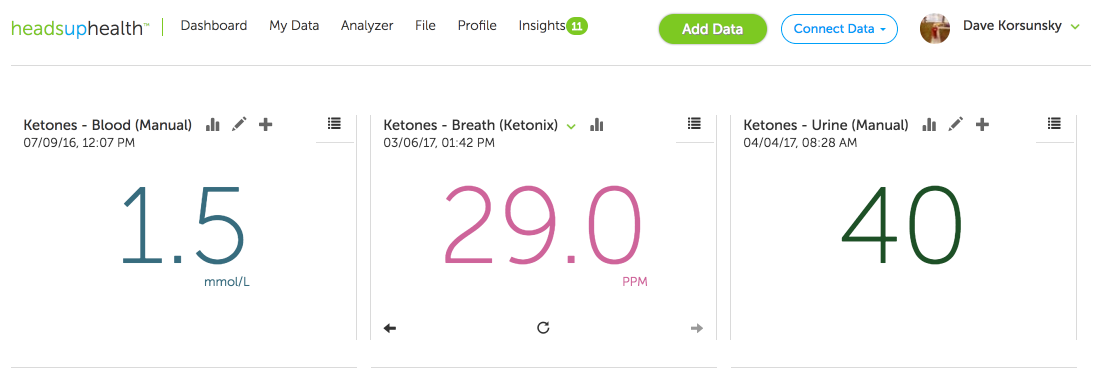
Once clients have a good handle on what it feels like to be in ketosis and which variables affect their level of ketosis (sleep, stress, exercise etc.), they may need to test ketones less often. Conversely, clients using a ketogenic diet as part of a clinical protocol for epilepsy, diabetes, obesity or fasting may need to keep testing regularly. Learn more about tracking ketogenic therapy with Heads Up.
Step 5: Don't Forget the Bloodwork
The last piece to keep an eye on is blood chemistry. We recommend periodic lab work (for example, every six months) to make sure everything on the inside is trending in the right direction.
There are a few specific sets of lab values to watch. We break them down here with high-level guidance on what to expect. For a detailed look at lab testing on low-carb diets, see our low-carb lab testing series, including the CAC test.
- Lipid panel (cholesterol, HDL, LDL, triglycerides): On average, low-carbohydrate diets lower triglycerides and raise HDL cholesterol, but they also raise LDL cholesterol. In a meta-analysis of randomized trials, LDL cholesterol rose more on low-carb diets than on low-fat diets. Track LDL cholesterol over time, and consider apoB or particle testing for a fuller picture of cardiovascular risk.
- Inflammation (hs-CRP, homocysteine): These and other markers of inflammation may come down as processed foods and refined sugars leave the diet. Track them to see whether that is true for each client.
- Blood sugar (glucose, insulin, HbA1c): Because dietary fat has little immediate effect on blood sugar and insulin, glucose and insulin often trend down on a low-carb, high-fat diet.
- Full thyroid panel: If a client seems to be doing everything right but still is not losing weight on keto, a full thyroid panel can be useful. In a small randomized crossover trial, a ketogenic diet lowered T3 and raised T4 levels compared with baseline, so changes in thyroid labs on keto need careful interpretation. A panel can also help long-time keto dieters who report symptoms such as hair loss or cold hands, which may suggest nutrient deficiency or thyroid-related issues.
Heads Up brings in lab results from labs such as Labcorp and Quest, and lab PDFs are extracted automatically, so results land in one longitudinal record next to glucose, ketone, nutrition and body composition data.
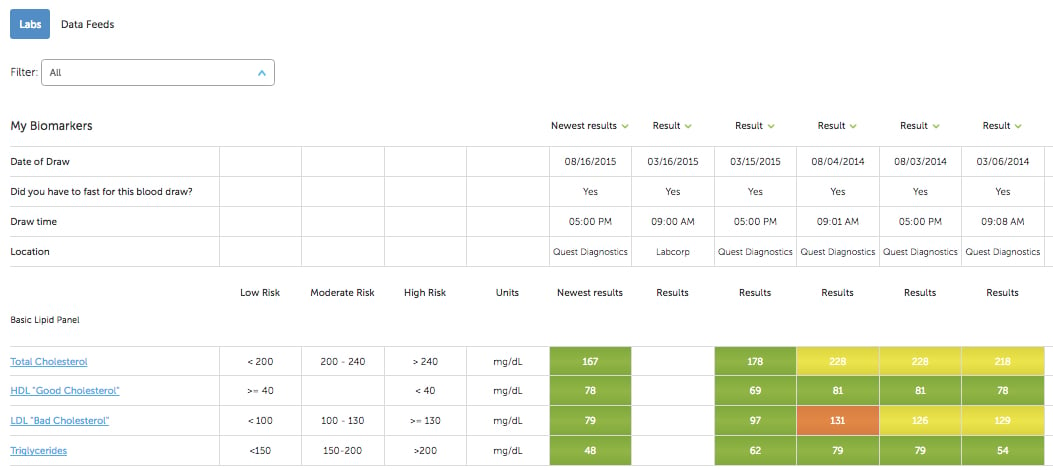
Tracking lab tests in Heads Up Health
Ketogenic Diet Summary
More and more people are turning to the ketogenic diet for the benefits that come from a body burning fat for fuel instead of sugar. The benefits don't always come easily, though, and ketogenic diets take some work, for clients and for the practitioners supporting them.
Heads Up gives practices one place to track macros, glucose, ketones, body composition and labs for every client, with threshold alerts and AI-generated pre-visit briefs that summarize what changed since the last visit. See how Heads Up tracks ketogenic therapy for your clients: request a demo. Questions? Contact us.
Appendix
Recommended reading for beginners:
- The Art & Science of Low Carbohydrate Living by Jeff Volek and Stephen Phinney
- The Art & Science of Low Carbohydrate Performance by Jeff Volek and Stephen Phinney
- Keto Clarity by Jimmy Moore and Eric Westman
Macro calculators:
- Perfect Keto macro calculator
- Ketogains (Metabolic Mastery) macro calculator
- Maria Mind Body Health macro calculator
- ruled.me ketogenic calculator
Online communities:
Recommended tools:
- Keto-Mojo dual-function glucose and ketone meter
- Withings wireless scales
- Fitbit wireless scales
- Urine ketone test strips
- Ketonix breath ketone meter
References:
- Evert, A. B., et al. (2019). Nutrition therapy for adults with diabetes or prediabetes: a consensus report. Diabetes Care, 42(5), 731-754. PubMed
- Jardiance (empagliflozin) prescribing information, Warnings and Precautions: Ketoacidosis. DailyMed
- American Diabetes Association. Diagnosis. diabetes.org
- Kreitzman, S. N., Coxon, A. Y., & Szaz, K. F. (1992). Glycogen storage: illusions of easy weight loss, excessive weight regain, and distortions in estimates of body composition. American Journal of Clinical Nutrition, 56(1 Suppl), 292S-293S. PubMed
- Mansoor, N., et al. (2016). Effects of low-carbohydrate diets v. low-fat diets on body weight and cardiovascular risk factors: a meta-analysis of randomised controlled trials. British Journal of Nutrition, 115(3), 466-479. PubMed
- Iacovides, S., et al. (2022). Could the ketogenic diet induce a shift in thyroid function and support a metabolic advantage in healthy participants? A pilot randomized-controlled-crossover trial. PLOS ONE, 17(6), e0269440. PubMed
- Fitch, J. (2024). First over-the-counter continuous glucose monitor FDA-cleared. Contemporary Pediatrics. Link
See how clinics use Heads Up
Unify labs, wearables and EHR data into one AI-assisted view. Book a walkthrough tailored to your practice.


2 comments
Keto With Kelly
This was very valuable content and easy to understand.
yes or no wheel
Great article! I'm starting the keto diet tomorrow and this will be great help!
Comments are closed.