

Updated October 2026: we corrected study details and citations, added newer research on fitness and mortality and on wearable VO2 max accuracy, removed a "coming soon" feature and fixed broken links.
Quantifying Biological Age and Enhancing Longevity
VO2 max is getting a lot of attention these days, especially since Peter Attia highlighted its importance in his book "Outlive."
One of the larger analyses, a meta-analysis in JAMA pooling 33 studies and more than 100,000 people, found that each 1-MET increase in cardiorespiratory fitness was associated with a 13% lower risk of all-cause mortality. What's more, large treadmill-testing cohorts have found no upper limit to the benefit: in 122,007 patients at the Cleveland Clinic, elite fitness was associated with the lowest mortality, and in more than 750,000 U.S. veterans, there was no increase in risk even at extremely high fitness levels. The higher the fitness, the lower the all-cause mortality.
That's why VO2 max belongs among the core metrics of a longevity program, tracked on each client's record and reviewed over time.
Learn how health professionals use Heads Up for optimizing their patients' longevity.
What is a Good VO2 Max Score?
Here we've included charts that break down VO2 max by age and gender.
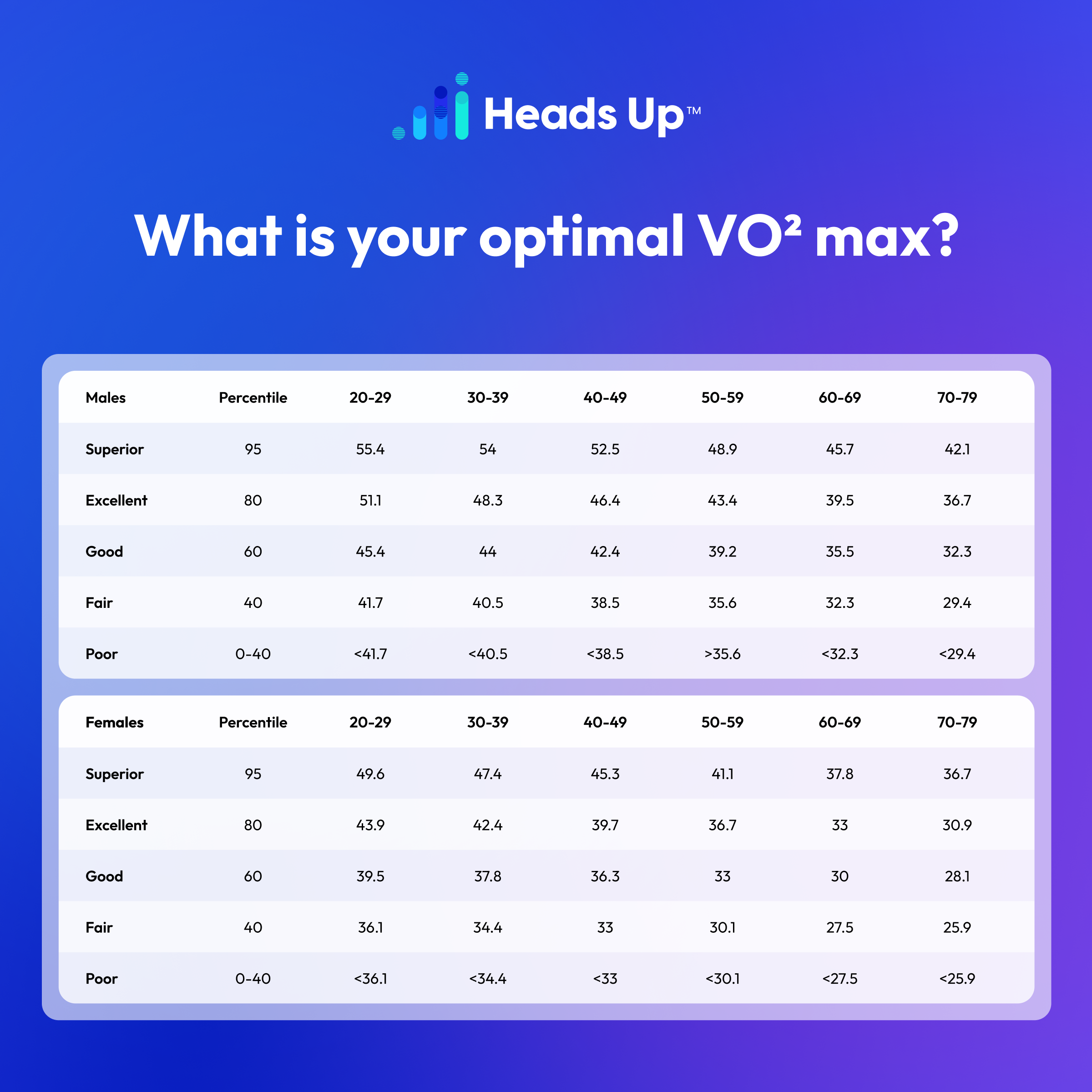
At Heads Up, we've made it easier to track this critical longevity metric for your clients. There are two main ways VO2 max data reaches a client's record in Heads Up:
- Clinic-measured results, such as values from a cardiopulmonary exercise test (CPET), added to the client's longitudinal record.
- Automated data collection from wearable integrations.
Many top wearables like Oura, Apple Watch, and Garmin can estimate VO2 max and sync to Heads Up automatically. Apple Watch and Garmin estimate it from heart rate during outdoor walks or runs, while Oura's Cardio Capacity uses a six-minute walk test. These estimates are convenient for trends, but they are not as accurate as a lab test: in two validation studies, Apple Watch underestimated VO2 max by about 6 mL/kg/min on average, with a mean absolute percentage error of about 13% (Lambe et al., 2025; Lambe et al., 2026). Use wearable values to follow direction of change, and confirm important decisions with a CPET.
- Track VO2 Max for Each Client: See VO2 max on the client's record next to labs, wearables and other device data.
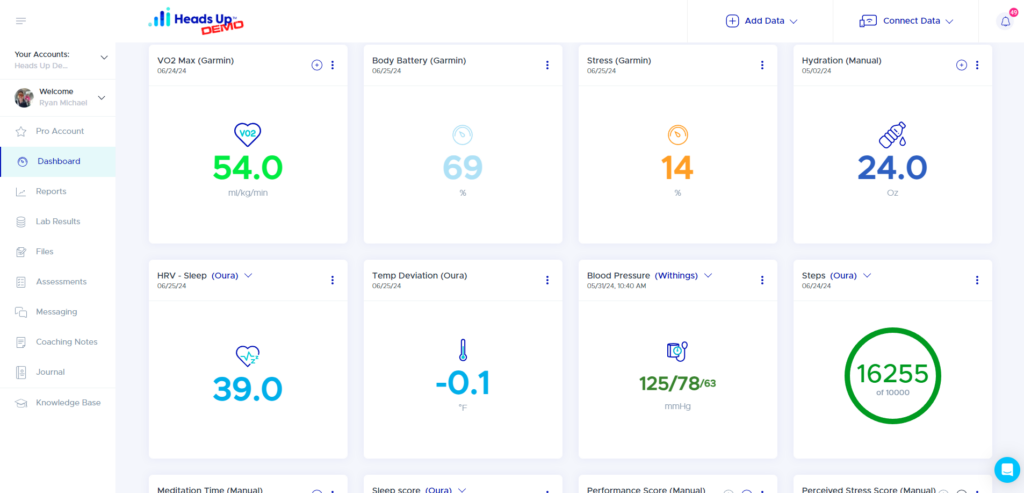
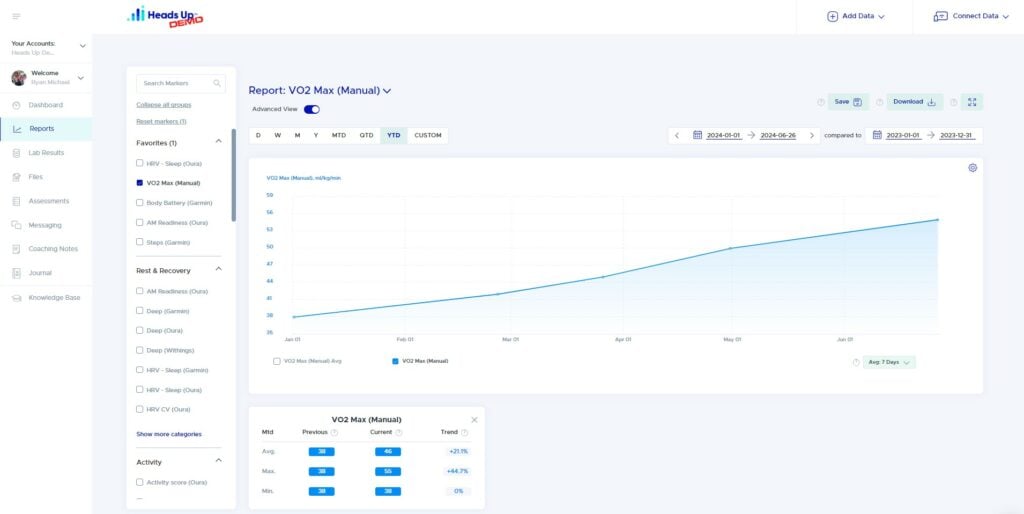
- Monitor Trends Over Time: Follow how VO2 max progresses for each client in their longitudinal record.
- Catch Changes Early: Use threshold alerts to flag meaningful drops, and let the AI copilot summarize what changed since the last visit in a pre-visit brief.
VO2 max testing is a critical component in longevity programs, providing insights into cardiovascular fitness and overall health.
Utilizing VO2 max data can help practitioners tailor fitness and wellness plans, monitor progress, and make informed decisions to enhance client outcomes. Heads Up simplifies this process by giving practitioners one place to track and analyze VO2 max data over time.
With automatic syncing from top wearables and a longitudinal view of every client's data, you can provide your clients with more personalized care.
Science of VO2 Max
VO2 max, or maximal oxygen uptake, is a critical measure of cardiovascular fitness and aerobic endurance. It reflects the body's capacity to utilize oxygen during intense exercise, offering a window into an individual's physiological health. Research highlights the role of VO2 max in not only gauging physical fitness but also in stratifying risk and predicting longevity.
This article explores the science behind VO2 max, its implications for biological age assessment, and strategies to enhance VO2 max for improved longevity. Additionally, we discuss how healthcare professionals can utilize platforms like Heads Up to track and validate longevity outcomes.
Introduction
As the pursuit of longevity becomes a significant focus in modern healthcare, understanding and measuring biological age has gained prominence. Unlike chronological age, biological age reflects the physiological state of an individual's body, influenced by genetics, lifestyle, and environmental factors. VO2 max stands out as a potent marker in this context, providing insights into cardiovascular health and overall physiological function. The American Heart Association has gone as far as making the case for cardiorespiratory fitness as a clinical vital sign.
Understanding VO2 Max
VO2 max, defined as the maximum volume of oxygen that an individual can utilize per minute during exhaustive exercise, is a key indicator of aerobic fitness. It is expressed in milliliters of oxygen consumed per kilogram of body weight per minute (mL/kg/min). The higher the VO2 max, the greater the body's capacity to perform sustained aerobic activities.
Measuring VO2 Max
VO2 max is typically measured through graded exercise tests, where an individual performs increasing levels of exertion on a treadmill or cycle ergometer until volitional fatigue. During the test, oxygen consumption and carbon dioxide production are measured using a metabolic cart to determine the point at which oxygen uptake plateaus despite the increased workload.
VO2 Max and Biological Age
The Link Between VO2 Max and Longevity
A robust body of evidence links higher VO2 max levels with increased longevity. Studies have shown that individuals with higher cardiorespiratory fitness tend to have lower risks of cardiovascular disease and mortality. In the Cleveland Clinic cohort, the increase in mortality risk associated with low fitness was comparable to or greater than that of traditional risk factors such as smoking, diabetes and coronary artery disease (Mandsager et al., 2018). This association stems from the role of VO2 max as a marker of cardiorespiratory fitness, which is crucial for maintaining cardiovascular health and metabolic efficiency.
Quantifying Biological Age with VO2 Max
VO2 max serves as a valuable metric for assessing biological age. Unlike chronological age, which simply accounts for the number of years lived, biological age encompasses the functional status of an individual's body. A high VO2 max for one's age suggests better overall health and a higher capacity for physical exertion.
Researchers have also developed models that estimate cardiorespiratory fitness from simple clinical information. In a Norwegian cohort of more than 37,000 adults, one such non-exercise estimate predicted long-term cardiovascular and all-cause mortality in people under 60 at baseline (Nes et al., 2014).
Tracking VO2 Max Over Time
Importance of Longitudinal Tracking
Tracking VO2 max over time provides valuable insights into an individual's health trajectory. Regular assessment can help identify trends and detect early signs of cardiovascular or metabolic decline, allowing for timely interventions. For athletes and fitness enthusiasts, monitoring VO2 max helps tailor training programs to optimize performance and recovery.
Using platforms like Heads Up, practitioners can track VO2 max and other biometric data longitudinally for each client. This enables a comprehensive view of health trends and provides a basis for data-driven decisions regarding health and wellness interventions.
Methods for Tracking VO2 Max
There are several methods for tracking VO2 max, ranging from laboratory-based assessments to wearable technology:
- Laboratory Assessments: These provide the most accurate measurements, typically involving graded exercise tests with metabolic analysis.
- Field Tests: Tests like the Cooper 12-minute run or the Rockport walk test offer practical alternatives for estimating VO2 max in less controlled environments.
- Wearable Technology: Advances in wearable tech have made it possible to estimate VO2 max through devices like fitness trackers and smartwatches, which use algorithms based on heart rate and other physiological data. Individual readings can be off by several mL/kg/min, so they work best for following trends. Heads Up integrates data from these devices, providing a seamless way to monitor and analyze VO2 max trends over time.
Benefits of Regular Monitoring
Regularly monitoring VO2 max allows for the assessment of the effectiveness of training regimens, adjustments in lifestyle interventions, and tracking of long-term health outcomes. For individuals focused on longevity, maintaining or improving VO2 max is crucial for sustained health and vitality. Heads Up lets practitioners see each client's progress over time and share it with them through the client companion app, facilitating better health management and outcome tracking.
Improving VO2 Max for Longevity
Exercise and VO2 Max
Exercise is the most effective way to enhance VO2 max. Both aerobic and high-intensity interval training (HIIT) have been shown to significantly improve VO2 max levels.
- Aerobic Training: Activities such as running, cycling, and swimming increase cardiovascular endurance by enhancing the efficiency of the heart and lungs in oxygen transport and utilization. Intensity matters: in a randomized study of older patients with heart failure after a heart attack, aerobic interval training at 95% of peak heart rate increased peak VO2 by 46%, compared with 14% for moderate continuous training (Wisløff et al., 2007).
- High-Intensity Interval Training (HIIT): HIIT involves short bursts of intense exercise followed by rest or low-intensity periods. This form of training has been found to be particularly effective in boosting VO2 max. Research reviewed by Gibala et al. (2012) indicated that low-volume HIIT can produce improvements in VO2 max comparable to traditional endurance training, with the added benefit of shorter workout durations.
Heads Up can track changes in VO2 max and other relevant health metrics over time, providing a comprehensive overview of the impact of different exercise regimens on cardiovascular fitness and biological age.
Dietary and Lifestyle Factors
Beyond exercise, dietary and lifestyle factors also play a role in supporting aerobic capacity. Proper nutrition, adequate hydration, and sufficient sleep are essential for supporting cardiovascular health and training quality.
- Nutrition: A balanced diet supports cardiovascular function and overall fitness. Dietary nitrate, found in leafy greens and beetroot, has been shown to reduce the oxygen cost of submaximal exercise and can, in some circumstances, improve exercise tolerance and performance (Jones, 2014), although that is not the same as raising VO2 max itself.
- Lifestyle: Avoiding smoking, managing stress, and maintaining a healthy weight are critical for preserving cardiovascular health. Because VO2 max is expressed per kilogram of body weight, changes in weight also change the number.
Heads Up can bring in nutrition data from food trackers like Cronometer alongside sleep and activity data from wearables, giving practitioners insight into how these factors relate to each client's VO2 max and overall health.
Personalized Approaches to Enhancing VO2 Max
Given the individual variability in response to exercise and lifestyle interventions, personalized approaches to enhancing VO2 max are recommended. Genetic factors, baseline fitness levels, and personal preferences should guide the design of tailored programs to achieve the best outcomes. With Heads Up, practitioners can build programs and protocols with adherence tracking and focus on the data most relevant to each client.
VO2 Max in the Context of Aging
VO2 Max Decline with Age
VO2 max declines with age, and the decline speeds up over time. In the Baltimore Longitudinal Study of Aging, peak VO2 fell by about 3% to 6% per decade in people in their 20s and 30s, but by more than 20% per decade in their 70s and beyond (Fleg et al., 2005). This decline is associated with a decrease in cardiac output, muscle mass, and mitochondrial efficiency. Regular physical activity helps people maintain a higher level of cardiovascular fitness and functional capacity at any given age.
Strategies to Counteract VO2 Max Decline
To counteract the age-related decline in VO2 max, a combination of aerobic and resistance training is recommended. Engaging in regular physical activity, particularly exercises that challenge the cardiovascular system, can help preserve and even improve VO2 max levels into later life.
- Aerobic Exercise: Activities like brisk walking, jogging, and swimming are effective for maintaining cardiovascular health and aerobic capacity.
- Strength Training: Building muscle mass through resistance exercises supports overall fitness and functional capacity as clients age.
Using Heads Up, practitioners can follow clients' activity data and changes in VO2 max over time, and adjust fitness plans to counteract the effects of aging.
How Heads Up Can Help Healthcare Professionals
Tracking and Monitoring Longevity Programs
For healthcare professionals offering longevity programs, tracking and monitoring clients' health metrics over time is crucial. Heads Up provides a comprehensive platform that allows practitioners to:
- Monitor Key Health Metrics: Track VO2 max and other critical health indicators such as heart rate variability (HRV), blood pressure, glucose levels and lab results in one longitudinal patient record, with 100+ device, lab and EHR integrations.
- Spot What Changed: Use the AI copilot to summarize what changed since the last visit and to answer plain-language questions about a client's data, and set threshold alerts for the metrics that matter most.
- Validate Outcomes: Assess the effectiveness of longevity interventions by comparing pre- and post-program data, helping to validate the success of various health strategies.
Enhancing Client Engagement
By offering clients access to their own health data through the Heads Up companion app (iOS and Android), healthcare professionals can encourage greater engagement and adherence to longevity programs. Clients can track their progress, follow their program, and gain a deeper understanding of how their lifestyle choices impact their long-term health.
Case Studies and Validation
Heads Up also supports the creation of case studies and validation of longevity programs through the data collected within the platform. By documenting clients' health changes over time, healthcare professionals can build an evidence base for their own programs.
Long Live VO2 Max
VO2 max is a critical measure of cardiovascular health and a valuable tool for assessing biological age. By providing insights into an individual's physiological state, VO2 max helps predict longevity and guide interventions to promote long-term health. Regular monitoring and personalized strategies to enhance VO2 max can play a crucial role in maintaining vitality and extending healthy lifespan.
Platforms like Heads Up help healthcare professionals track and analyze health data, validate longevity programs, and support sustained health and wellness for their clients. As the understanding of biological age and longevity continues to evolve, VO2 max will remain a key component in the pursuit of optimal health and well-being.
Discover More
Learn more about using Heads Up to track VO2 max combined with other important health metrics with patients. Discover Longevity Dashboards, or see our longevity biomarker panel guide.
References:
- Kodama S, Saito K, Tanaka S, et al. Cardiorespiratory fitness as a quantitative predictor of all-cause mortality and cardiovascular events in healthy men and women: a meta-analysis. JAMA. 2009;301(19):2024-2035. doi:10.1001/jama.2009.681
- Mandsager K, Harb S, Cremer P, et al. Association of cardiorespiratory fitness with long-term mortality among adults undergoing exercise treadmill testing. JAMA Network Open. 2018;1(6):e183605. doi:10.1001/jamanetworkopen.2018.3605
- Kokkinos P, Faselis C, Samuel IBH, et al. Cardiorespiratory fitness and mortality risk across the spectra of age, race, and sex. Journal of the American College of Cardiology. 2022;80(6):598-609.
- Ross R, Blair SN, Arena R, et al. Importance of assessing cardiorespiratory fitness in clinical practice: a case for fitness as a clinical vital sign. A scientific statement from the American Heart Association. Circulation. 2016;134(24):e653-e699.
- Bassett DR, Howley ET. Limiting factors for maximum oxygen uptake and determinants of endurance performance. Medicine and Science in Sports and Exercise. 2000;32(1):70-84.
- Blair SN, Kohl HW, Paffenbarger RS, et al. Physical fitness and all-cause mortality: a prospective study of healthy men and women. JAMA. 1989;262(17):2395-2401.
- Myers J, Prakash M, Froelicher V, et al. Exercise capacity and mortality among men referred for exercise testing. New England Journal of Medicine. 2002;346(11):793-801.
- Nes BM, Vatten LJ, Nauman J, et al. A simple nonexercise model of cardiorespiratory fitness predicts long-term mortality. Medicine and Science in Sports and Exercise. 2014;46(6):1159-1165.
- Fleg JL, Morrell CH, Bos AG, et al. Accelerated longitudinal decline of aerobic capacity in healthy older adults. Circulation. 2005;112(5):674-682.
- Wisløff U, Støylen A, Loennechen JP, et al. Superior cardiovascular effect of aerobic interval training versus moderate continuous training in heart failure patients: a randomized study. Circulation. 2007;115(24):3086-3094.
- Gibala MJ, Little JP, Macdonald MJ, Hawley JA. Physiological adaptations to low-volume, high-intensity interval training in health and disease. The Journal of Physiology. 2012;590(5):1077-1084.
- Jones AM. Dietary nitrate supplementation and exercise performance. Sports Medicine. 2014;44(Suppl 1):S35-S45.
- Lambe R, O'Grady B, Baldwin M, Doherty C. Investigating the accuracy of Apple Watch VO2 max measurements: a validation study. PLoS One. 2025;20(5):e0323741.
- Lambe R, Schumann M, Donnelly L, et al. Accuracy of VO2 max estimates from Apple Watch Series 10. Mayo Clinic Proceedings: Digital Health. 2026;4(2):100357.
Want to learn more?
Discover how top longevity experts quantify and improve longevity outcomes in their practice.
Sign up for the longevity training.

See how clinics use Heads Up
Unify labs, wearables and EHR data into one AI-assisted view. Book a walkthrough tailored to your practice.


