
Breath, Metabolism & Measurable Outcomes: How Respiratory and Metabolic Testing Are Changing Clinical Programs
Discover how Heads Up and O2Max are bringing clinical-grade metabolic and respiratory data (VO₂ max, RMR, spirometry, HRV, and CO₂ tolerance) into one longitudinal clinical view, giving clinicians the context they need to find the limitations that wearables and standard diagnostics can’t reveal.
In this 90-minute clinical session, Gilles Essiembre, founder of O2Max, walks through how breath, metabolism, and respiratory mechanics are quantified, the limitations clinicians can spot with a complete metabolic profile, and how simple retraining protocols produce measurable changes in fat oxidation, stroke volume, and exercise tolerance. Through real case studies (a Toronto Maple Leaf hockey player, an 85-year-old golf patient, six firefighters in New Brunswick, and a live walkthrough using panelist Leonard Pastrana’s own data) he shows what becomes visible when respiratory and metabolic data are read together, and how to act on what you see. Heads Up CEO Dave Korsunsky shares his own transformation, and panelist Leonard Pastrana, PharmD adds clinical longevity context throughout.
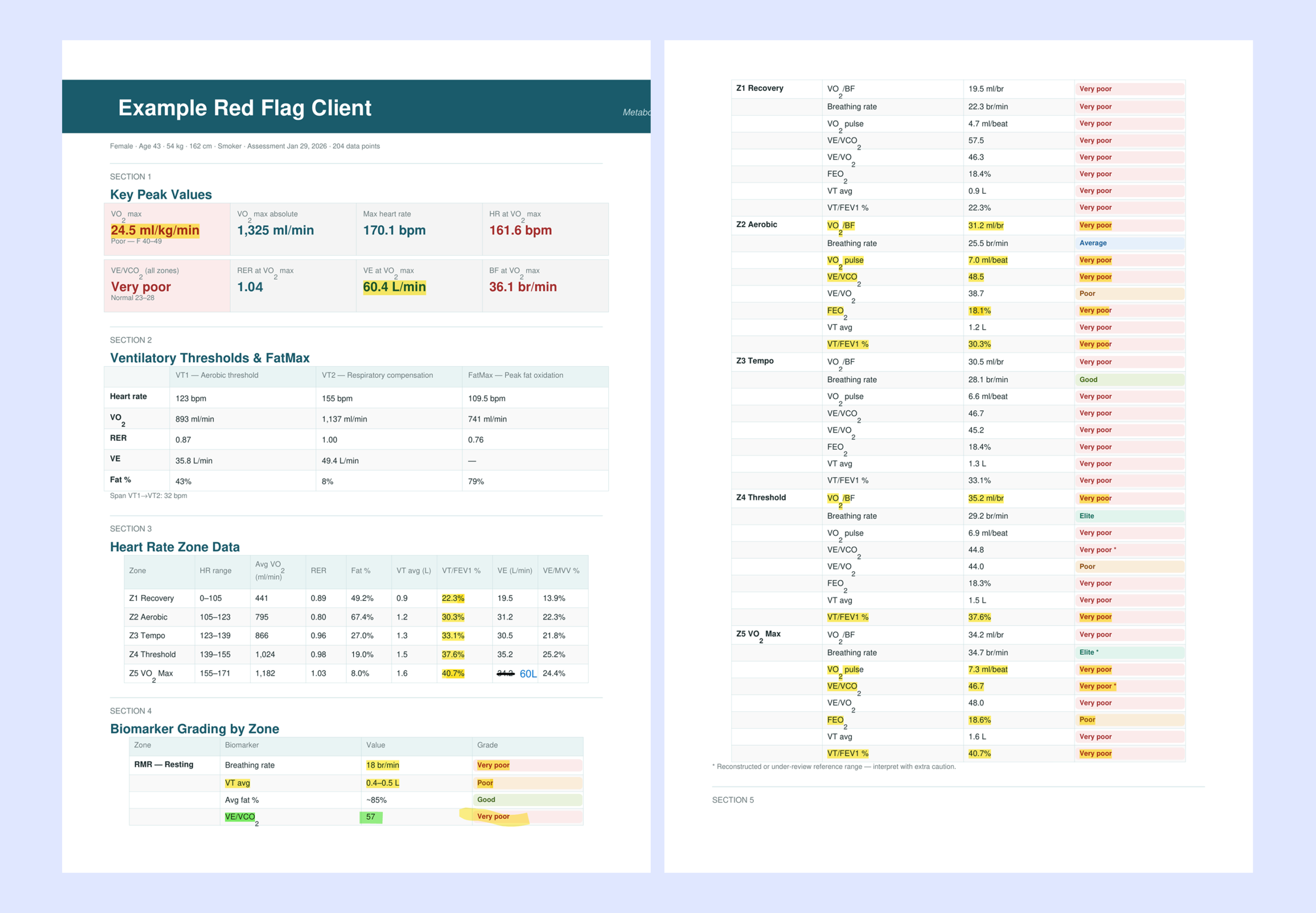
Overview, an O2Max metabolic report showing the 40+ biomarkers captured in a single session.
Featured Speaker
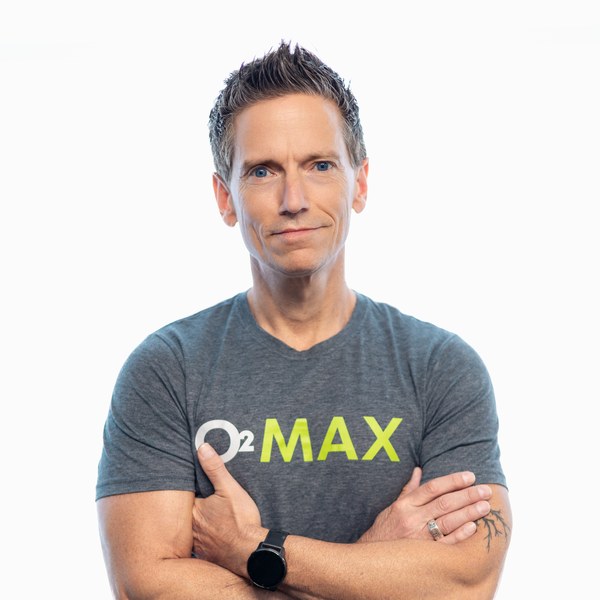
Gilles Essiembre
Founder, O2Max
Gilles Essiembre, founder of O2Max, is a metabolic and respiratory health consultant who works with wellness and performance clinics around the world to reverse metabolic age, increase performance, and optimize breathing, metabolism, endurance, and overall health for clients ranging from professional athletes and longevity clients to those with asthma, COPD, and pulmonary conditions.
Using advanced testing, data analysis, HRV optimization and scientifically backed respiratory training methods, Gilles collaborates with leading clinics, coaches, pulmonologists, and health professionals to deliver personalized insights and programs that improve oxygen utilization, CO₂ tolerance, cellular health, and metabolic efficiency, helping clients achieve higher performance and a healthier life.
What you’ll learn
01
Why VO₂ max alone misses the bigger picture
Standard VO₂ max gives clinicians one biomarker. A complete metabolic and respiratory profile reveals 40+, including breathing frequency, tidal volume, minute ventilation, fat versus carbohydrate substrate utilization, oxygen extraction, and ventilation efficiency at every heart rate.
02
How to spot chronic over-breathing in your clinic
The symptom cluster most clinicians never connect: brain fog, frequent yawning, cold hands and feet, anxiety, exercise intolerance. All can trace back to a respiratory limitation that an RMR or HRV reading picks up in ten minutes.
03
CO₂ tolerance and the BOLT score
An underappreciated longevity marker. How to test it, why it correlates to nervous system regulation, metabolic flexibility, and even mental health, and how patients improve it in weeks.
04
The breath retraining method, with a live case study
Gilles walks through a real-time case study using panelist Leonard Pastrana’s own data. By keeping everything else identical and slowing his breathing from 24 to 16 breaths per minute, Fat Max increased 40%, stroke volume gained 10%, and oxygen absorbed per breath jumped 66%, in a single session, with no other intervention.
05
The six pillars of respiratory muscle training
Capacity, exhalation power, inhalation power, diaphragm endurance, coordination, and mobility, plus the Isocapnic device training that builds respiratory capacity without requiring physical exercise.
Quick recap
Gilles Essiembre, founder of O2Max, presents on the limitations of single-biomarker thinking in clinical performance and longevity practice. Using real case studies from professional athletes, longevity clients, and his own live assessment of co-panelist Leonard Pastrana, PharmD, Gilles demonstrates how clinical-grade metabolic and respiratory data reveals 40+ biomarkers that wearables and snapshot diagnostics cannot. Heads Up CEO Dave Korsunsky shares his own transformation through breath retraining, and Leonard Pastrana (co-founder of nuBioAge, faculty at Human Longevity Institute) provides clinical longevity context throughout. The session covers VO₂ max, RMR, spirometry, HRV, CO₂ tolerance, the metronome retraining method, and the six pillars of respiratory muscle training.
Summary
The “invisible ceiling” most clinicians miss
Dave opens the session by sharing his own experience: years of sleep optimization, diet, peptide therapy, and HRV tracking, and yet a respiratory limitation he couldn’t see. Gilles explains that chronic over-breathing limits oxygen delivery at the cellular level, blunts fat oxidation, and silently caps the results of every other clinical intervention. The clue isn’t in any single wearable metric; it shows up across RMR, HRV, and CO₂ tolerance readings interpreted together. As Dave puts it, “I was in better shape than the data revealed. I just wasn’t actually breathing properly.”
What a complete metabolic profile actually measures
Gilles walks through what O2Max captures in a single clinical session: resting metabolic rate, VO₂ max, spirometry (FVC, FEV1), heart rate variability, and CO₂ tolerance (the BOLT score plus a walking variation). The system reads 40+ biomarkers across breathing frequency, tidal volume, minute ventilation, fat versus carbohydrate substrate utilization, oxygen extraction, ventilation efficiency, stroke volume, and lactate threshold, at every single heart rate during the test.
Case study: Dr. Leonard Pastrana’s breath manipulation
Live in the webinar, Gilles walks through a case study using his co-panelist’s own data. By keeping everything else identical and slowing Leonard’s breathing from 24 to 16 breaths per minute using a metronome, Fat Max increased by 40%, stroke volume gained 10%, oxygen absorbed per breath jumped 66%, and his Zone 2 ceiling moved from 4.4 to 6.7 miles per hour, a 50% gain in pace at the same metabolic effort. No conditioning. No supplements. No peptides. Just breath retraining.
Beyond the elite athlete: outcomes across the spectrum
The same principles apply across the population. Gilles shares results from a Toronto Maple Leaf hockey player (VO₂ max +16%, stroke volume to 36 ml/beat, treadmill endurance +13%), an 85-year-old golfer who went from struggling to finish 9 holes to comfortably enjoying 18 with energy left over, six firefighters in New Brunswick (33% lower breathing rate, 32% gain in CO₂ tolerance, 20% reduction in minute ventilation at 8.5 mph), a Taiwanese professional soccer team that averaged 16% VO₂ max gains in four weeks, and an Olympic swimmer whose anxiety attacks were visible in her breath pattern before she said a word about them.
The metronome method and Isocapnic training
For clinicians wondering what “retraining” actually looks like in practice, Gilles demonstrates the metronome patients use during runs to retrain breath frequency. Pair that with the Isocapnic respiratory trainer (a device that moves as much air as a 5-kilometer run while sitting down) and most patients see measurable shifts in 4 to 6 weeks. The breath rate prescription is calculated from a patient’s FEV1, minute ventilation, and current overventilation pattern, which means it’s personalized to lung size and respiratory capacity, not guessed.
The bigger picture: breath as the foundation of healthspan
Throughout the session, Dave returns to a central theme: for all the talk of fancy diagnostics, peptides, and wearables, the simplest variable in clinical performance and longevity is also the most overlooked. Yogic traditions have understood pranayama as the source of life for millennia; what’s new is the ability to quantify it. As Leonard adds, this is also where personalization in longevity medicine finally has the data to back it up. Once you can see the limitation, you can address it precisely, and the protocol stops being one-size-fits-all.
“The number one regulator of healthspan, it still comes down to breathing. At the end of the day, the simplest thing in the world.”
Next steps
Ready to see your data layer and AI layer working together? Book a 30-minute mapping session to design your pilot — including hormone data, wearables, labs, and the AI workflow on top.
Book a 30-minute mapping session
We’ll map your current data sources, identify the highest-leverage AI workflows for your practice, and outline a pilot — including success metrics.
0 Comments