

Episode 82 – Discover InBody – The Latest In Cutting-Edge Health Assessment Technologies

Episode 82 – Discover InBody – The Latest In Cutting-Edge Health Assessment Technologies

In this brand new episode, we’re sitting down with Bradley Davie to learn about the exciting new technology from InBody USA. Supported by over 5,100 clinical studies worldwide, InBody technology is revolutionizing the way we assess body composition.

Discover how InBody is able to accurately report muscle mass, body fat, and other key biomarkers, allowing professionals to create more effective health interventions and regimens for patients.

Unlike traditional methods, InBody offers an affordable, non-invasive solution that tracks a variety of biomarkers that are often overlooked. Tune in as Bradley dives into the importance of tracking key biomarkers like grip strength, muscle distribution, and water balance for longevity. 

With its capacity to provide crucial information for individualized health regimens, InBody tools are a must-have for clinicians helping anyone looking to achieve lasting results.

InBody’s body composition analysis technology represents a powerful step forward for health professionals looking to provide more personalized and effective care. With insights into crucial metrics such as muscle mass, body fat, and water distribution,

InBody tools allow clinicians, wellness experts, and fitness professionals to go beyond traditional measurements, supporting data-driven decisions that enhance patient outcomes.


HIGHLIGHTS Of This Data Driven Podcast

[2:30] Bradley’s Health Optimization Journey

[4:10] What Makes Inbody So Unique?

[6:40] Technological Differences Between the Dexus Scan and InBody

[10:05] Efficient Data Management With InBody USA

[12:45] The Best Biomarkers to Track

[17:40] Common Use Cases for Clinicians

[21:25] Understanding Hydration Levels

[26:45] How Do Inbody Machines Work in Hospitals?

[31:40] Must-Know Data for Longevity

[37:26] Integrating InBody With Heads Up

Whether used in a clinical, wellness, or fitness setting, InBody empowers health providers to offer tailored, impactful guidance—helping patients and clients achieve sustainable, health-focused goals. By integrating this technology, practitioners can support proactive health strategies and foster improved patient outcomes, making a significant impact on long-term wellness and quality of life.

Connect with Bradley and InBody USA

InBody Special Offer: Ecosystem Bundle $1,649 Value

Complimentary height stadiometer and grip strength dynamometer for anyone purchasing an InBody body composition analyzer along with the BPbio750 blood pressure monitor.

This special promotion enables health professionals to acquire the full suite of tools for a comprehensive health assessment kit, enhancing their ability to provide detailed and holistic health data to clients or patients.

The kit discussed in the podcast is an integrated setup combining multiple InBody devices to create a comprehensive health assessment system. It includes:


    • InBody Body Composition Analyzer – This core device measures body composition metrics such as body fat percentage, muscle mass, visceral fat, and water distribution, giving a detailed view of a person’s body health beyond basic weight.
    • Height Stadiometer – Measures height accurately, which is then synced to the body composition analyzer, ensuring precise BMI and body composition calculations.
    • Blood Pressure Monitor (BPbio750) – This automatic device provides blood pressure readings, complementing body composition data with cardiovascular health metrics.
    • Grip Strength Dynamometer – Measures grip strength, a predictor of overall muscle quality and a key indicator of longevity and health. Grip strength has been linked to outcomes related to cardiovascular health and metabolic efficiency.

Together, these devices communicate via Bluetooth, integrating all collected data into a single profile on the body composition analyzer. The synchronized data offers a full health snapshot, enabling practitioners to assess patients’ overall health more thoroughly. This kit is especially valuable for clinics, wellness centers, and longevity programs, as it provides an all-in-one solution for tracking and managing various health metrics. Learn more.

CPT Code Resources


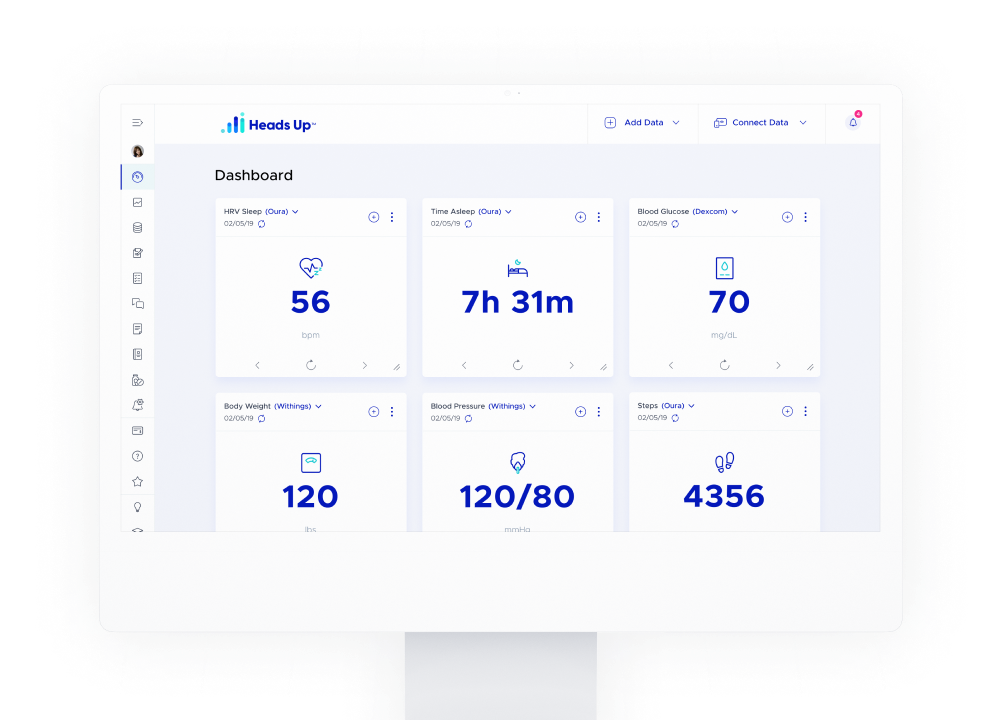
This podcast is brought to you by Heads Up, a web and mobile app designed to help both individuals and health practitioners centrally track vital health data that matters while validating impact on health outcomes.
main cta a z

Optimize Health & Longevity

Synchronize your clients’ medical records, labs, wearables, apps, and more into Heads Up for better outcomes. 
Sign Up now for a free starter account!

Calculating the Neutrophil-Lymphocyte Ratio (NLR) as Immune and Inflammatory Markers

Calculating the Neutrophil-Lymphocyte Ratio (NLR) as Immune and Inflammatory Markers

Conventional vs. Functional Lab Testing Ranges And Markers

The Neutrophil-lymphocyte ratio is a blood marker calculation used in functional medicine, particularly in the fields of immunology and cancer.  Looking at conventional lab testing can be a great screening tool for diseases and disorders, but looking at them through a functional lens can provide insight into the health trend of a patient long before a disease is discovered.

Functional ranges and ratios can help a clinician to see the health trend of a patient long before a diagnosis is made, thereby improving the overall health, wellness, and longevity potential of a patient, lowering medical costs, and improving the quality of life.

What Is NLR?

The neutrophil-lymphocyte ratio (NLR) is a calculation that can be run off of a Complete Blood Count (CBC), which is a very low-cost, low barrier test picked up by most insurance companies or available through any direct to consumer lab testing. This marker  “may be an indicator of systemic inflammation, as neutrophils and lymphocytes are thought to be significant in tumour immunology and inflammation.

What Do Neutrophils And Lymphocytes Do?

Neutrophils are a white blood cell (WBC) and are part of the innate immune system, which is the branch of our immune system that we are born with and identifies potential threats as either self or not-self. They make up about 60-70% of WBCs, are made in the bone marrow, and are found mostly in the lymphatic system including the lymph nodes, spleen, and thymus.

Lymphocytes are another type of white blood cell, and are part of the adaptive or acquired immune system, making up about 20-25% of the WBCs and are more specific in their targets. They are what we acquire after exposure to a virus or pathogen and is the system that vaccines are based upon.

Together the neutrophils and lymphocytes work to protect the body from potential pathogens or threats, by increasing inflammation to bring nutrients to the site of injury or using inflammation to keep the infection or pathogen from spreading to other parts of the body easily.

How Can The Neutrophil-Lymphocyte Ratio Benefit Myself Or My Patients?

Looking at the ratio between neutrophils and lymphocytes can help to show if there is an increased likelihood of inflammation and other threats to the system that are working in the background against the body on a chronic or acute level.  This ratio is often used with functional doctors who work with cancer patients. One study found that preoperative breast cancer patients with a high NLR had worse outcomes than those with a lower NLR. Another study found that the NLR in conjunction with a CRP (C-Reactive Protein) could be a better predictor of outcome for gastric cancer patients utilizing a ratio known as COC-NLR.

NLR may help to reflect systemic inflammation in patients with cancer and their immunologic capacity to mount an attack against the malignant cells. An increasing number of recent reports suggest that NLR can be used as a prognostic marker in various malignancies”.  The NLR “has been shown to predict cardiac arrhythmias as well as short- and long-term mortality in patients with acute coronary syndromes”.

How Do I Calculate Neutrophil-Lymphocyte Ratio (NLR)?

To calculate the NLR marker, you simply need to divide the neutrophils into the lymphocytes based on your most recent CBC. Rather than manually calculating your patient’s NLRs, Heads Up is now calculating this measurement for you when you import or enter your lab values into our system.

Seeing the trends over time will provide an even deeper insight into the health trend of your patients and can be a warning sign that it’s time to take action with diet or lifestyle interventions or perhaps even consider further testing.

What Do The Numbers Mean?

I use a 2:1 or better ratio for neutrophils to leukocytes for the NLR when working with patients. For example, a ratio of 55-60:25-30 would be the highest/lowest I would want to see a neutrophil to lymphocyte ratio.

I also look at how big of a gap there is between neutrophils and lymphocytes, with a larger gap indicating a higher risk. Additionally, there is cause for concern if there is a relative ratio switch and the lymphocytes are elevated, and neutrophils lowered which could equate to blood dyscrasias, leukemias, lymphomas.

Consult with your health professional of choice if you have questions on these or any other lab values.

How can I track my NLR?

If you are using the Heads Up app to track lab values, you can either use the default ranges or enter your own custom ranges depending on your unique health objectives.

This video will show you how to track lab values and customize ranges in your Heads Up profile.

Customize your lab test reference ranges from Heads Up Health on Vimeo.


Resources

https://www.ncbi.nlm.nih.gov/pmc/articles/PMC4839997/

https://pubmed.ncbi.nlm.nih.gov/30544398/?from_term=NLR&from_page=2&from_pos=1

https://pubmed.ncbi.nlm.nih.gov/29491721/?from_term=NLR+&from_page=2&from_pos=4

https://www.ncbi.nlm.nih.gov/pmc/articles/PMC5458276/

https://pubmed.ncbi.nlm.nih.gov/26878164/?from_term=NLR&from_pos=1

https://ic.steadyhealth.com/low-neutrophils-and-high-lymphocytes