by Heads Up Health | Dec 19, 2023 | Educational, Heads Up HQ
GLP-1 medications are used for both blood sugar management and weight loss. This means you may be looking for different results, depending on why you are taking it.
Maximizing Blood Sugar Control
Like other diabetes medication, the goal of a GLP-1 is to help control your blood sugar. You can track your own blood sugar with a meter at home to determine if you are seeing results. Your doctor may also want to periodically measure your blood sugar, HgbA1C, or other blood markers to evaluate if the medication is working.
The best way to ensure that the GLP-1 medication is working to improve your blood sugar is to follow a diabetic diet and other healthy lifestyle habits. A diabetic diet is a balanced diet that includes lean proteins, vegetables, healthy fats, whole grains, and fruits. Foods that should be limited include sweets, foods high in sodium, sugar-sweetened beverages, and fried foods.
Meals should also be well-balanced to include the right portion of carbohydrates and protein. A registered dietitian can provide guidance on what type of diet to control your blood sugar.
Other ways to optimize the results of your GLP-1 on blood sugar are to exercise regularly, get enough sleep each night, and keep your stress well-managed. GLP-1 medications are just a tool in your diabetes management toolbox, other healthy lifestyle habits still need to be in place to help the medication work.
Maximizing Weight Loss
GLP-1 medications work to induce weight loss by increasing satiety after meals (meaning you get full faster), reducing appetite, and controlling blood sugar. In order to ensure you lose weight at an optimal rate, it is recommended that you follow a healthy, well-balanced diet and exercise regularly.
A diet that is focused on lean protein, fruits, vegetables, and healthy fats will help support weight loss. Limit sweets, sugar-sweetened beverages, and alcohol, to boost your weight loss further. Drink plenty of water, at least 8 glasses per day.
It may be tempting to eat as little as possible to lose weight faster. But this could potentially backfire, as you could lose too much lean muscle making it difficult to keep the weight off long-term. Instead, try to eat at least 3 small meals per day and always start your meal with protein, which supports healthy muscle and metabolism.
Finally, consider a multivitamin while on the medication, since you may not be able to meet all of your nutritional needs due to the smaller portions of food.
References:
- Diabetes Diet, Eating, & Physical Activity. (2023, July 12). National Institute of Diabetes and Digestive and Kidney Diseases; NIDDK – National Institute of Diabetes and Digestive and Kidney Diseases. https://www.niddk.nih.gov/health-information/diabetes/overview/diet-eating-physical-activity
- Shah, M., & Vella, A. (2014). Effects of GLP-1 on appetite and weight. Reviews in Endocrine & Metabolic Disorders, 15(3), 181–187.
- Moon, J., & Koh, G. (2020). Clinical Evidence and Mechanisms of High-Protein Diet-Induced Weight Loss. Journal of Obesity & Metabolic Syndrome, 29(3), 166–173.
by Heads Up Health | Dec 19, 2023 | Educational, Heads Up HQ
GLP-1 medications are meant to be long-term treatments for diabetes or obesity. Both are considered chronic conditions that need to be managed over an individual’s lifetime.
GLP-1 for Diabetes
If you are using a GLP-1 for diabetes management, do not stop the medication without speaking to your doctor first. They can determine if GLP-1 is still an appropriate treatment for your diabetes management or if you can transition to a different medication. Do not stop the medication cold turkey, as it may cause your blood sugar to increase.
GLP-1 for Weight Loss
Many people use GLP-1 medications for weight loss and are unsure what to do once they reach their goal weight. A conversation with your provider is always the best place to start.
If you are looking to transition off a GLP-1 medication because you have reached your goal weight, proceed with caution. A 2022 study found that when people stopped taking the medication they gained back about ⅔ of the weight they lost within a year. Additionally, all of the metabolic improvements while on the medication were also reversed.
There is no specific protocol for transitioning off of a GLP-1. There are no harmful effects from simply stopping the medication. GLP-1 medications have a 7-day half-life, which means the medication will likely be out of your system within 2 weeks. Once the medication is out of your system, you may experience an increase in appetite.
If you prefer to taper the medication slowly, you can try moving to a lower dosage for a period of time. It is best to speak to your doctor about the best way to stop the medication.
If you have struggled with obesity for a long time, it is not recommended that you stop taking GLP-1 medication. These medications are a long-term treatment for obesity management, they are not a temporary solution.
References:
- Wilding, J. P. H., Batterham, R. L., Davies, M., Van Gaal, L. F., Kandler, K., Konakli, K., Lingvay, I., McGowan, B. M., Oral, T. K., Rosenstock, J., Wadden, T. A., Wharton, S., Yokote, K., Kushner, R. F., & STEP 1 Study Group. (2022). Weight regain and cardiometabolic effects after withdrawal of semaglutide: The STEP 1 trial extension. Diabetes, Obesity & Metabolism, 24(8), 1553–1564.
- Hui, H., Farilla, L., Merkel, P., & Perfetti, R. (2002). The short half-life of glucagon-like peptide-1 in plasma does not reflect its long-lasting beneficial effects. European Journal of Endocrinology / European Federation of Endocrine Societies, 146(6), 863–869.

by Dave Korsunsky | Mar 13, 2020 | Heads Up HQ
Hi there! Welcome to Heads Up. Our mission is to put the power of data at your fingertips and make you the CEO of your health!
We’ve built our platform around the following core concepts:
1. Centralized Medical Records
We help you centralize all of your medical records in one place, regardless of where they exist. Thanks to advancements in electronic health records, we can now automatically pull in your records from thousands of different facilities across the country. For your medical records that aren’t online, we make it easy to import data from those files as well. If you are busy and on the go, our Concierge Service can do the data entry for you. Whether it’s your cholesterol data or your immunization records, we make it easy to maintain a complete history of your health at all times.
2. Technology to self-manage
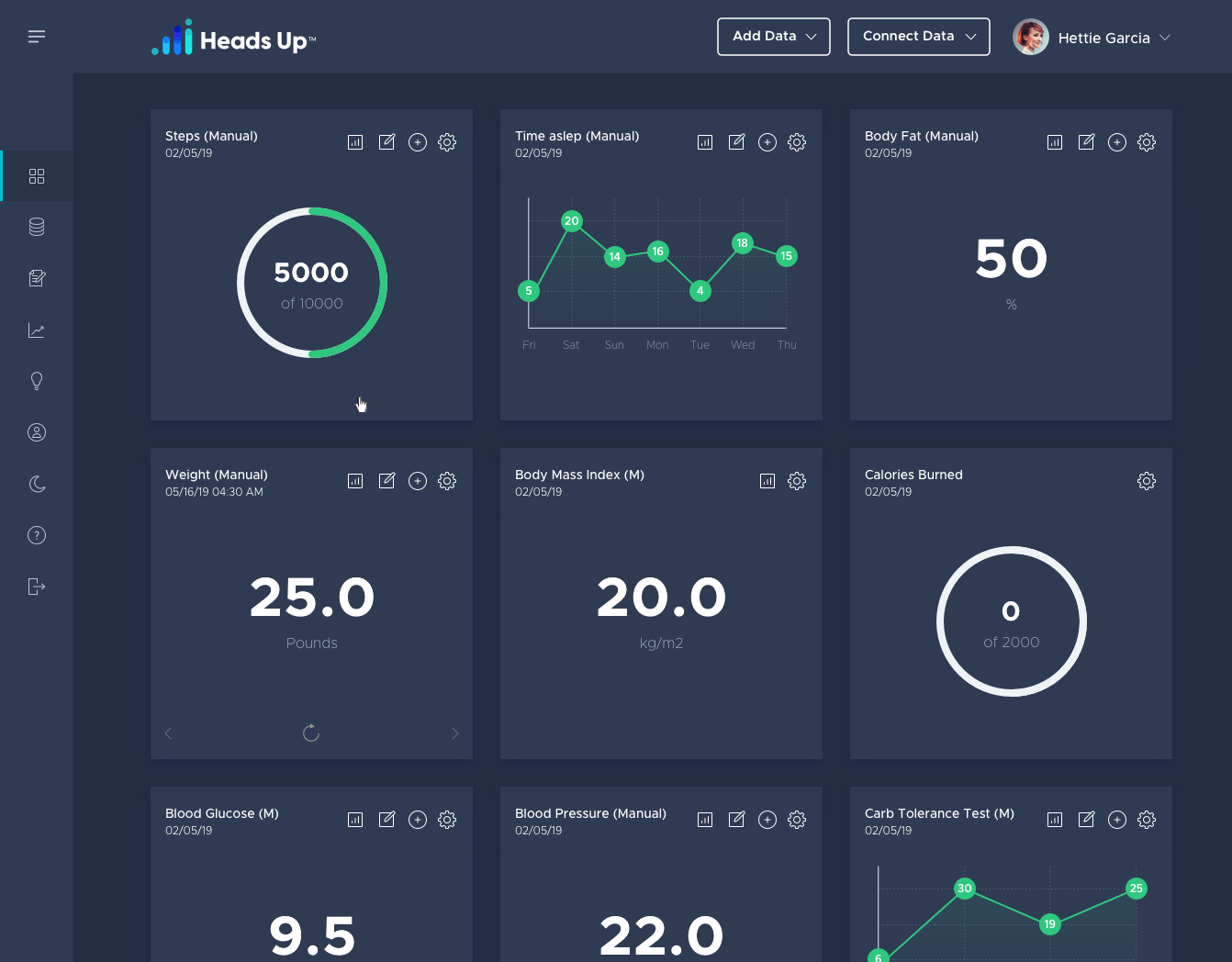
Emerging wearable technology makes it easier than ever to collect valuable data on our health. We integrate with industry leading wearables (Oura, Keto-Mojo, Biostrap, Garmin, Apple Health and many more…), wireless scales, blue tooth blood pressure monitors, glucometers and a range of other health devices.
With your medical data and your wearable data in one place, it’s easy to see how your lifestyle choices are affecting your overall health.
3. Help me use my data to improve health outcomes
With all of your medical and wearable data in one place, we provide you with personalized insights and powerful analytics tools to master your health using your own data.
Is my FitBit really lowering my weight over time? Are my dietary changes really lowering my cholesterol or my blood sugar? By bringing all your information into one place, we can help you measure and quantify your progress over time in ways that have never been possible before.
4. Share my data with whomever I choose
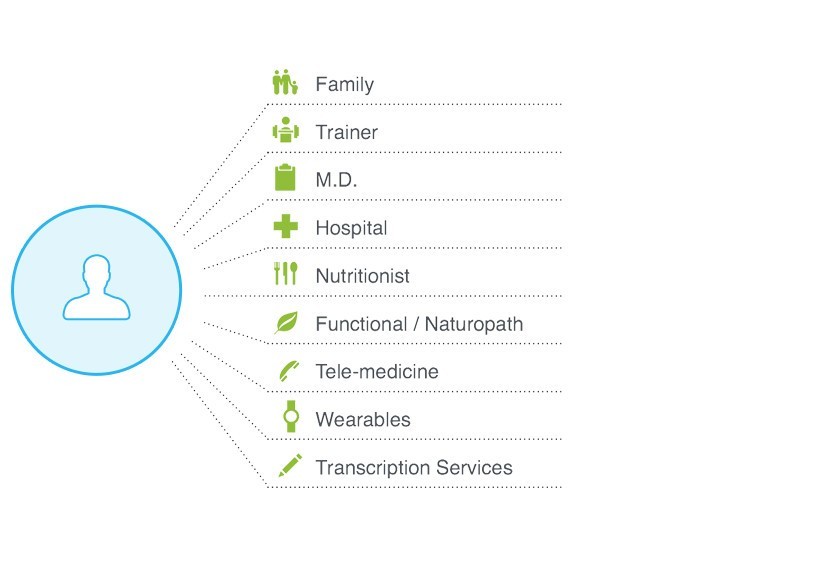
At Heads Up we realize that your care team extends beyond just your medical doctor. We’ve made it easy to share your health information as you see fit. Whether you choose to consult with a medical doctor, a nutritionist, a personal trainer, a functional medicine specialist or a family member, we make it easy to give them access to your health information so you can make informed decisions.
Whether you move to the other side of the city or the other side of the world, you need to take your health information with you. We built our software so that your health information is not locked into any specific doctor’s office, hospital system, insurance company or employee wellness system. You control your data and you can take it with you wherever you go.