by Dave Korsunsky | Oct 18, 2022 | Podcast
Podcast: Play in new window | Download
Subscribe: Apple Podcasts |
Drea Burbank is an M.D.-technologist and serial entrepreneur whose work is focused on applying high-tech from hard science into critical sectors. She has projects from artificial intelligence, cryptocurrency, to stem-cells, and microbiome science.
Her interdisciplinary skill set comes from a dedication to reducing barriers to innovation at the intersection of medicine, technology, and research, and the pursuit of enriching public health through these developments. Drea Burbank brings so much to the table in the world of medicine and tech, and it was insightful to hear what she had to share.
Tune in as she talks about struggles inherent in healthcare technology, her passion for public health, spirituality, and her work with indigenous groups.
HIGHLIGHTS
[00:46] Drea Burbank in Background in Medicine and Technology
[06:59] Her Current Projects
[08:04] Challenges of Electronic Healthcare Systems
[12:09] Bringing in More Tech to the Healthcare Industry in Terms of Security and Care
[19:07] Lifestyle Approaches to Healthcare
[22:33] Drea’s Interest in Public Health, Preventative Medicine, and Spirituality
[26:21] On Spirituality and Medicine
[33:43] Drea’s Thoughts on the Intersection of Medicine and Technology with Spirituality
[38:37] More on Drea’s Current Conservation Project
[42:59] Takeaways from Working With Indigenous Cultures
[47:05] Importance of Health Data and Sensor Technology
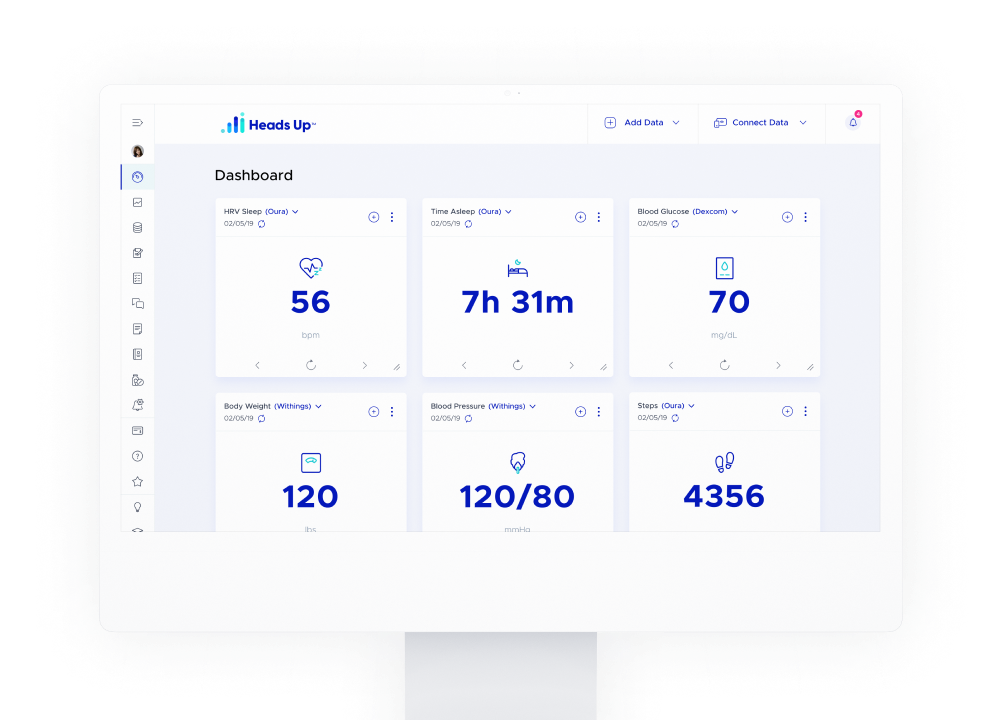
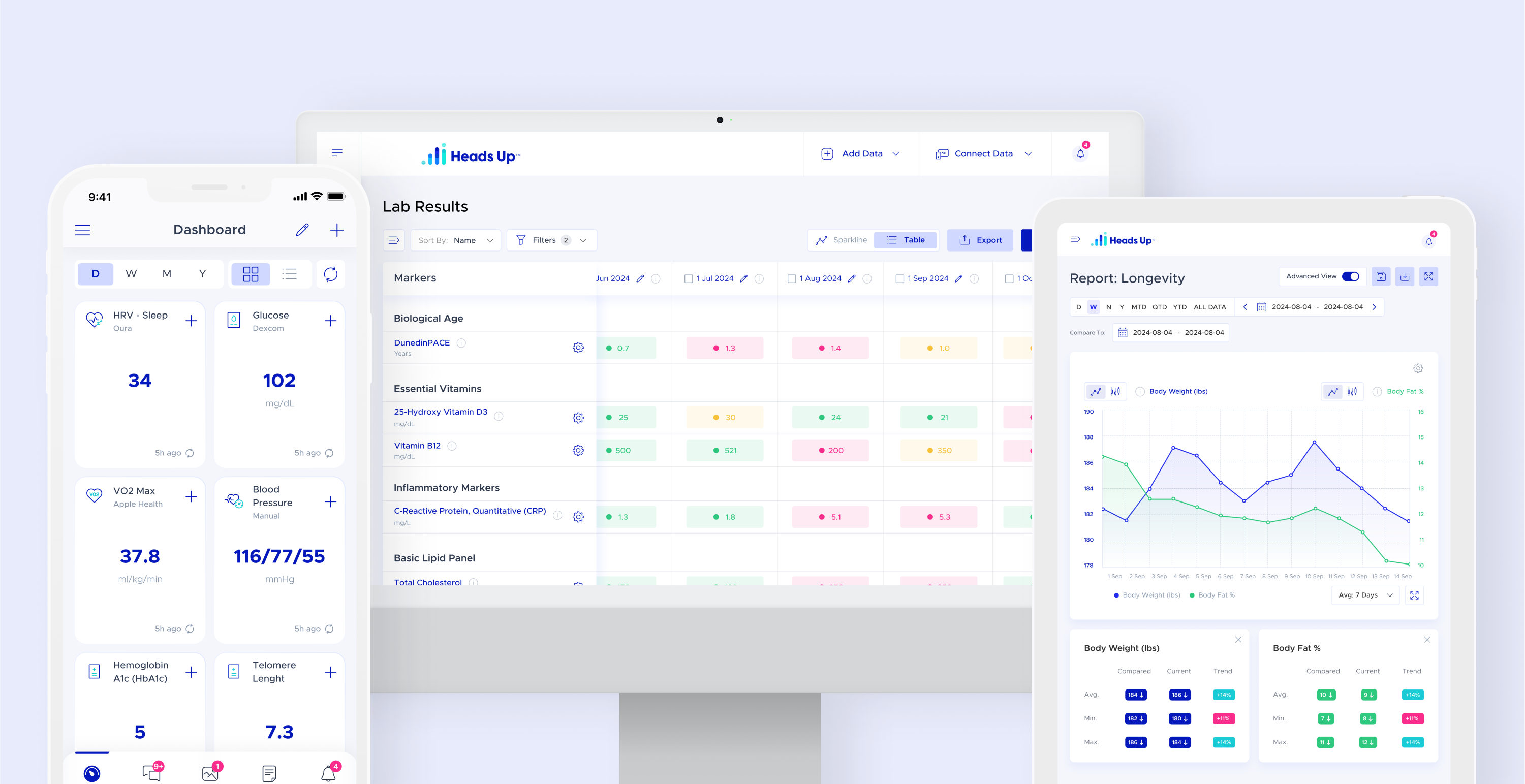
00:02 Dave: Hey everyone, welcome back to another season of Data-Driven Health Radio, I’m your host Dave Korsunsky. On this show we dive deep into how you can use data to measure, manage and optimize your health with the latest science and technology. This show is brought to you by Heads Up which is our web and mobile app designed for individuals and healthcare professionals who need a precise way to measure and manage health data. Check us out on headsuphealth.com. If you’ve got comments, questions or feedback on this show shoot us an email support@headsuphealth.com, we’d love to hear from you, and with that said let’s get into our next exciting episode.
00:47 Dave: Hey everyone, welcome back to Data-Driven Health Radio and I have a very special guest today Drea Burbank, she is an MD and a technologist and a million other things that I could not actually have time to finish going through in anticipation of this interview but I just went down the rabbit hole of Drea in all of the interesting projects that she has her hands on so, we are gonna get into all kinds of really, really interesting topics related to health, optimization, technology, some of Drea’s personal passion projects that she is working on that she wants to share with the world. So, Drea, we first got on your radar screen because you had written some content around the struggles that are inherent with electronic record systems and that’s actually why I started my whole company in the first place. So, we will have lots to talk about there, really just like, can I even get a trend line of the most important health metrics that matter to my existence above ground, it was a nightmare. It was like paper records and patient portals and I was trying to work on a health issue and I just needed a simple trend line of like inflammation markers and to this day that is still impossible so I would really like to dig in there and we’ll branch off from there. But Drea, if I may, I would like to take a crack at your background just from like the initial cursory research I did cause there was just some absolute gems on your website, can I and then you can correct me.
02:17 Drea: Yeah sure, I’m curious to see what your takeaway was.
02:20 Dave: Alright, so I just scribbled a few things here but Drea is an MD-technologist and she is a digital nomad with a yoga addiction, love that. She pretends to live San Francisco but we don’t actually know if she lives in San Francisco, yoga dirtbag, professional pyromaniac, uptight uber nerd and smartass. So those were the nuggets I pulled off the site. Welcome Drea to our show.
02:48 Drea: Thank you, I am so happy to be here.
02:50 Right on. Well, let’s just start with something simple like the content, the piece you put out there around inherent challenges with electronic health records, technology like I said that’s why we built our company but I’d love to hear about your background as an MD first and foremost, sounds like you probably ran into a lot of those challenges but maybe we could just start with your background in healthcare and the types of work you did or maybe still doing in the medical field and then lets go from there into all these other amazing worlds that we can open up.
03:23 Drea: Yeah, happy to talk to about it. So, I grew up off the grid in central Idaho, I did 9 years in forest fires and then I went to medical school in Canada. I was in a rural and remote training program and..
03:35 Dave: Where in Canada? I’m from Canada.
03:37 Drea: Really? I was in Kelowna, I was the first of four medical students in the hospital in Kelowna.
03:42 Dave: It’s beautiful up there.
03:43 Drea: It was stunning. We were so lucky they had just, they had kept med students out of the hospital for a long time and a lot of the, you know, top clinicians across Canada would retire to Kelowna cause it was a kind of a beachfront property for Canada.
03:56 Dave: Yeah.
03:57 Drea: And they ran the hospital the way they had always wanted to run their hospitals so the nurses basically functioned like residents, and they had a really collaborative relationship with the physicians and they had a huge catchment area so they would pull all kinds of specialty cases but they still did overnight call from the hospital. So, I worked with mostly attending physicians and I had just had a really idyllic version of medicine. Yeah, it was like the best of specialty care with generalist care and like good working relationships, interdisciplinary, yeah and really, really talented physicians, clinically talented. So, we had a daw system in the hospital that had been introduced and I was watching these amazing physicians trying to use this daw system and I was like I could do better I started playing Plants vs. Zombies and I was like wow you could just do something like this it would be easy. Yeah, so, I think sometimes that naivete is necessary to do interesting things, you’re like oh this would be easy. So, I was like well I’m just going to do a year in Silicon Valley, I’ll design something and then I’ll, I’ll come back to medicine.
04:59 Dave: I got ya, so that was what kind of like, first of all you’re a US citizen but you went to Kelowna to do the training, is that correct?
05:06 Drea: So, I was a forest firefighter and I followed it north. I started following big stacks in British Coloumbia, all the best falling if your you know a logger or forest firefighter happens in Canada so I really wanted to learn that. I married a Canadian and I was already in Canada so when I went back to school I went to school for medicine in Canada.
05:24 Dave: And then that experience got you down to Silicon Valley to start working on technology centric problems in healthcare, is that accurate?
05:33 Drea: Yeah, I still think that if you want to get really hard tech skills you gotta go to Silicon Valley. I know that sounds exclusionary but the competition in Silicon Valley is global and so when you go there you end up working with the best people from all over the world. There are other tech hubs obviously, Toronto has a great tech hub, Vancouver does, Austin all these other placed I was just in Dubai and it’s great but if you want to get that really, really hardcore skillset I think you need to spend some time in the Valley.
06:01 Dave: Yeah, I spent the better part of 10 years out there, I was in Paolo Alto working at VMware and that’s where I got to really like build my skills, work alongside all of these amazingly brilliant people just learn how that whole industry works out there. I don’t think I really could have started a company, I probably could have, but the skills I learned there are I think just inherently part of what’s helping me stay successful is just cutting my teeth in Silicon Valley basically.
06:32 Drea: You don’t have to stay there I just, they have got a really good ecosystem like if you go to Stanford hospital a lot of the academics will leave for a couple of years, start a tech company and then go back to Stanford so they kind of like cycle through and the hospital is pretty good, they have got a like a really nice like, I worked with Nirav Shah for a little bit he is a computer science professor who works with a lot of the doctors, Nimar Agaeepour so they are just super integrated with the clinical needs and that’s where, I don’t think I’ve ever seen it anywhere else.
06:59 Dave: So, are you practicing now or are you mostly working on other types of projects?
07:04 Drea: Yeah, I left clinical medicine in 2018, we got drafted to work on all kinds of high-tech stuff during Covid. We ended up running a concierge Covid testing network for Hollywood which was so random, I was just, they called us, they couldn’t work at all during the height of the virus and they asked us to get test results back and we were like yeah we can do that it’ll be easy. So we, they were getting their test results back in 7 days from Labgen it was our TPCR we got our first results back in 6 hours and then every producer in Hollywood called us and we ended up testing like NFL players, sports broadcasters during the height of the shutdown. So, that was a lot of fun for us because it was basically using both sides of our head you know, like, the ability to scale really rapidly comes from my tech but the ability to do like serious work like a legitime RTPCR test that no body can question is, comes from medicine and we really like those kind of projects. We’re highly serious but we can still access all these different skills.
08:03 Dave: Awesome, I love it. Well, just kind of going back to like how we first got on your radar it was really looking at the inherent challenges of EHR systems. I was reading through the article and there’s implications in terms of the amount of extra load that it puts on to a providers workday. There’s the challenges of actually how can we even start pulling the data out of these systems and doing more with it, that’s why Heads Up started because we wanted to find a way to allow an individual to pull in all of their information regardless of what system it’s in and then also the data that they are using on the sensors at home, you know, all these sensors, CGM’s different devices that we can use now are actually getting incredible data, patients now actually have incredible data they have higher fidelity data than the doctor does, they have more contextualized data than the doctor does. They don’t have the clinical expertise necessarily to do a lot of the interpretation but there is incredibly promising startups out there that are bringing medical technology to individuals and building user experiences that help them understand their bodies own bio feedback. So, what we try to do at Heads Up was say how do I get all that lab data in cause that’s stuff your testing once a year, once every six months and if you’re making correct modifications in diet and lifestyle or maybe you’re already in a good place, you’re making optimizations in diet and lifestyle or maybe you’re in a red zone state health wise and you need to change certain things in your daily routine so we wanted to find a way to overlay lifestyle metrics coming from sensors and devices with more like episodic clinical data. So, that’s what we do at Heads Up. I know you and I haven’t really had a chance to talk at any level of depth but we really wanted to build like the agnostic analytics layer in healthcare which was really lacking and we needed a way to quickly plug in new technology, new data sources, new devices, new types of information and then what we wanna do is build an analytics layer and then an intelligence layer on top of it but maybe you could just summarize like what some of the top pain points are that you put in an article for everyone who is listening and then we can kinda go from there, they were pretty succinct.
10:23 Drea: Yeah, I was, it was a little profane but that is one of my tendencies from firefighting
10:27 Dave: I saw that on your website that you dropped a lot of profanities and f-bombs, we are gonna get along great.
10:33 Drea: Yeah, there is something about the stress relief aspect of it for me, but yeah, I think so the first thing I wanted to say yes somethings going wrong, like a lot of doctors are so stuck down in their trees they are not realizing their forest is getting cut down and they’re feeling the pain but they’re feeling it without any kind of like conscious awareness of like why that forest is getting cut down when the larger market forest is behind it. So, I wanted to acknowledge that something is wrong and it’s so wrong that it has to change at some kind of a critical level. Yeah.
11:03 Dave: I would agree with that, I mean just, we had an experience recently working with a large health system and it was actually to the point where it was impossible to do business with them due to a lot of these limitations and we all just chased our tails around for 18 months and then the project got shut down and went nowhere. So like, that’s I dunno, that’s what we are up against basically.
11:22 Drea: Yeah, it’s literally like it’s become a complete heart block to use a medical term. The physicians are leaving the profession in droves right now and we hear all these statistics about burn out and physicians wanting to leave and it’s being attributed to Covid but I don’t think it has anything to do with Covid. I think Covid was just like you know, the straw on the camels back, what I think it’s about is like the quality of the workday of the average physician and these are sensitive people who are high performing who are intellectual, they are hardworking and if they are burning out there is something extremely wrong, and doctors in particular because we feel such a, you know, obligation to give more and more and more and more and that’s impressed on us from such an early age in training and we get a lot of like social positive social feedback for all the things that we give so when we are burning out there’s something wrong with that.
12:08 Dave: Yeah, and you were also making some comments around how do we help the profession as a whole bring in more technology. How do we help them bring in more of the latest types of things like digital health technology that could enhance what they do and provide better patient care but I think one of the points that you were making is that there’s really even an inability to bring in innovation at this point so even if there was a desire there is no innovation reaching these types of professionals. Did I get that right?
12:38 Drea: Yeah, well what I wanted to say was that this is not happening by accident there is a layer of for profit EHR systems that profit from not providing high quality technology and blocking high quality technology from entering, and the only people who can break through that membrane is doctors themselves and to ask them to do that is a lot because they are already like overwhelmed they don’t necessarily know what to ask for and they don’t feel like there is any help on the other side of that membrane. But, in reality there is all kinds of very useful technologies that cannot penetrate right now like what you are working on.
13:16 Dave: Yeah, so if we were to kind of like wipe the slate clean and start over again for example, when we work with physicians in other countries for example, there’s one system for everybody. So, at least they’ve got all the data in one place, we’ve got the data in 30,000 places right now. So, there’s that issue of data fragmentation and then there’s obviously the inherent security challenges, like one of the challenges of trying to work with this large health system is just like the number of ransomware attacks that they’re dealing with on a daily basis and it’s like 9 months just to get their security team just to give you the thumbs up because they are under so much threat from a security point of view so like there’s that whole angle of it, and then there’s the ability to like also be innovate but also keep the Titanic moving in the right direction, you know what I mean? So like, how could we imagine a better way to do this type of thing, I don’t know that there is an answer right now but when you think about it what would the next iteration look like.
14:23 Drea: Well first I wanna go after the security thing cause the security thing is why doctors are always told you have bad health tech because there is a security risk. There is only a bad security risk because it’s terrible software, anybody at [unsure] nuclear power we have got a cohort that is nuclear power cyber security and everybody knows if you wanna hack somebody’s system you go after health tech because it’s so poorly designed. There’s just no excuse…
14:43 Dave: It’s a fundamental issue in the technology, that makes sense.
14:46 Drea: Yeah, it’s so badly built on the backend..
14:48 Dave: and 500 different servers connected to the internet…
14:50 Drea: Yeah, that’s why they’re so busy they are playing like whack-a-mole for like a terrible system with a bunch of holes in it. So yeah, I see that a lot doctors are like oh I have terrible software because it’s so unsecure, no it’s unsecure because you have terrible software so yeah that first. Second off, so I have two solutions that I think are absolutely critical of physicians, you know I’ve been drilling down on them pretty hard because after 10 years you start to look at what’s the solution, like I just get tired of problems. So, the two solutions I think are absolutely critical is that medicine needs to create a technology specific specialty it’s become critical, I don’t like using that word but it’s become critical. Doctors do not own technology as a profession, they will continue to rely on external professions providing their technology and they’re never gonna have the context that clinical training is unique. Somebody asked me the other day what I meant by clinical, and I said I mean putting your hands on 1000 patients with undiagnosed conditions with legal skin in the game for their outcomes, that’s clinical and then once you do that, okay yeah, now you can start looking at if there’s any technology for doctors but if you don’t do that you don’t know what they are thinking and more importantly you don’t have the same risks like doctors have so much professional, legal and financial risk for any mistakes that happen in medicine that if you can’t have empathy for that you’re never gonna understand their aversion to experimenting so that’s the first thing. Second thing is I think doctors have a really good legal case for opening, for cracking the software interfaces open and I think if they were able to crack the interfaces open they could bring better technology in by default. Technology companies would flood in the door and then if they had an app like interface they could select the ones they liked and that would just solve so many problems all at once, cause I know probably like 20 different apps that are usable, solve clinical problems and do a great job, they are HIPAA secure, they are way more secure than most hospital systems but doctors can’t buy them or use them or get to them in their regular workday because they don’t run on top of these interfaces.
16:51 Dave: That’s the challenge we just ran into was we had medical professionals in the system that wanted to use our technology to solve a very specific problem and they introduced us to a group that could help us get shepherded in to the front door, you know, so we had a sponsor that was a very clear use case, it was a program that was going to integrate the oura ring into a sleep optimization type of a program a pretty simple thing and we went down the path of trying to make this available to this group which was super exciting for us and it was the most dysfunctional red tape failed project I have ever been a part of, we couldn’t even get it, it was impossible we failed after like 18 months of spinning our wheels. So like you said, even if there was an interface where they were like hey I love this I want to apply this it meets all the security requirements, it’s HIPAA, it’s validated it was not possible.
17:49 Drea: These are legal problems for two reasons and this is coming from, I did a year in tobacco control and I worked with Stan Glantz. Stan Glantz got the unmarked boxes of tobacco documents back in like the 80’s, somebody sent him like 20 boxes of unmarked documents and then he went to court and like you know he’s a pretty hard headed guy he took it across California, he legislated tobacco and his back take away I remember one day he was standing there and he was waiving his hands in front of me, I talked to him for like an hour, and he was like if it’s for profit it’s a legal problem. So the people that made it impossible for your doctors to get your technology and for your technology to get in benefitted financially and when that happens, when they have a financial incentive to block new software from coming in to block the data on the backend from going out the only solution is legal and I think in this case, the people with the best and sharpest legal case are clinicians themselves because they can just tag the extra 6 hours they work a day and for doctors that’s a huge financial pace. They can tag those 6 hours to a class action and they don’t even have to be at mass for it they have to be individually recognized but for a class action, you have to get enough doctors saying yeah I worked an extra 6 hours a day and here’s my salary and then a legal firm will litigate it on their behalf.
19:07 Dave: Yeah, well when we started building out product and taking it to market we obviously were aware of the challenges of going into the conventional systems. We were well aware of the boneyard of startups that died on the vine trying to sell a great solution into a system and just ran out of cash even just like waiting to get a pilot agreement approved. It was extremely challenging and so what we did was we entered the market through what I would call more lifestyle medicine and we entered the market for us through the cash based side of healthcare and the types of practitioners that don’t take insurance, they used to work in the system and they have left and they are now in private practice and they are doing holistic or integrated or functional care, same types of things but they are now compensated in a way that allows them to spend 60/90 minutes with you going over a specific type of a situation. You’re paying them cash, you’re paying them out of pocket generally but those were the professionals who said okay I would pay this product and I’ll use it because it is giving me insights into what’s happening to my patients outside the office so now I can get a really, really precise view into lifestyle factors that are driving a health outcome like why does this persons blood sugar hit 180 every night at 9pm and then they have a crap sleep right, so like we started selling it to that market because they understood the value of the data, they could make really quick decisions, they could evaluate a product, sign with us and have this up and running in a week versus like what we went through at some of the larger systems. So, the way we though about it was well let’s go into this, I don’t even know what the right word for it is, I will just call it like integrative market for now, they were already doing a lot of lifestyle medicine they wanted to know what was happening to you during the day, they wanted to know what you were eating, they wanted to know certain information about maybe certain genetic snips, they wanted to run more advanced diagnostic testing in some cases that would be really hard to get a regular doctor to run something exploratory. Like, can you test these 10 things I don’t even know if there’s going to be anything there but I wanna keep going, I wanna dig deeper. So, we just kind of like found our tribe bringing our product in through that market and the reason I bring that up is because it looks like a lot of your professional interests are also in this world of integrative approaches to healthcare even just things like yoga it sounds like you are yogi. I also, I teach yoga, I teach kundalini yoga, Ashely who you connected with on my team. Ryan who you connected with on my team is a yoga teacher so like bringing that part in I wanna talk about your work in rainforests as well but you also dropped a little few clues on your book which I just ordered around shamanism so like there’s the plant medicine side of the house and that gets into mental health stuff which is like super important and I’m super excited to see things like ketamine and sustivan starting to come to life in clinical significant ways. So, it just seems that you also think that way and maybe you could just share on like some of your thoughts on the lifestyle approaches to health that are most interesting for you.
22:34 Drea: Yeah, so wow, okay, Canada is a great system and there is a lot of public health focus so I got a ton of public health training during my training and I was like dramatically interested in plastic surgery and micro surgery which is like the far end of down stream like and then I was really also simultaneously interested in preventative medicine and public health, and I ended up going the public health route. It was a tough choice, I loved both of them but my brain’s a little bit more lateral so I was like you know public health is going to be better for me. So I went into preventative medicine and then I started chasing that rabbit hole and I chased it around the world, you know, I looked at ayurvedic medicine, traditional Chinese medicine, indigenous medicine and the more I looked at it the more I saw like subtle effects of preventative medicine. It’s so holistic it’s hard to measure in the data, so I got really interested in that aspect and yes there is a tribe for that. I am a certified bikram yoga teacher so I did a project a few months ago, about 6 months ago, where I did twice daily 90 minute classes of bikram for 6 months and at the end of it…
23:33 Dave: You did it personally?
23:35 Drea: Yeah, it was fun and I did it in Thailand with […] and yeah […] a character and I’m a character we had a lot of fun.
23:43 Dave: I wish I had the time to do two bikram classes a day. I’m lucky if I get in one a week these days.
23:49 Drea: It was post Covid I was like totally burnt out and I was like, cause we did that testing network and then when the vaccine came out I was like that’s it I’m never working again so I went off for 6 months and then of course it didn’t take and I went back to work again afterwards but at the end of it I wrote this book and yes, it is out there, it’s of the other side of my brain the one I don’t talk about very often in a professional setting. But, yeah I have a strong, personally I have a strong spiritual experience that I would probably compare mostly to Shamanism or Zen Juadism I guess the type of Buddhist Christian Marie and Jed McKenna are like my favorites. I think in the western world we tend to differentiate between spirituality and medicine, they are completely independent things and we don’t talk about spirituality or we delegate it to other people but that split doesn’t occur in all cultures so I just spent the last month in the Peruvian Amazon working with indigenous Shaman and they were explaining that as a Shaman they were like well first off, I’m a community leader so the role of a Shaman is to be a community leader and also I mentioned this split between spirituality and medicine in the west and they were just kind of aghast they were like how could you separate the two? That doesn’t even make sense and I was like yeah it’s really interesting that for them that was kind of like outside of the bounds of acceptability. Whereas for us it’s just like a given in medicine and I wonder how much of our frustration with the system is also a frustration with the concept of what is health, because we are so busy treating disease and it’s a bell curve obviously you know, disease and health and so little of our training is in this concept of health, like if we want to fix somebody when they are diseased then what does it look like when they are healthy and you know we don’t know that much about it like how many doctors know about blue zones or you know the longevity science or you know how many of them study professional athletes when they study musculoskeletal injuries. You know we just always assume that we have understood everything about the human body cause we have studied pathology but no we just really studied one end of the bell curve and I think that without a concept personally and professionally of what health is we can’t truly treat disease and that’s what a lot of these guys bring it is this idea of holistic mental health and we don’t have that in our society right now.
25:58 Dave: Well that is incredibly fascinating insight to like have deeper in which is like we have this bifurcation of spirituality and medicine. Arguably a bifurcation of lifestyle and medicine and I think that’s like another major gap especially when it comes to things like food for example and stress. So, how could we start to bring that type of care more into the mainstream? I also think that our mental health, the amount of mental health disease in our country is maybe in a lot of developed countries is probably moving in the wrong direction as fast as what you would consider typical chronic illness like obesity and heart disease and stuff like that, this is just a completely subjective assessment but like the mental health, the number of people that could be diagnosed with mental health issues might even be climbing as fast as some of those like rampant Neolithic diseases and so like the spirituality and medicine idea is incredible and it’s so far outside of the purview of where we are now here I don’t know how we could close the gap on that. I can only say that I am encouraged by the FDA starting to fast track research into certain psychedelic medicines and other compounds and I think that is a good start especially if that could be standard of care where you can get that type of treatment in a medically supervised environment with proper people who can help you integrate an experience and have that. I think that could be a huge step forward for us and it’s already happening with ketamine clinics, it’s not meant to be preventative at this point, it’s meant to be acute where typically you’re going in there with like extreme cases of treatment resistant depression or something like that. But the point is that you can go to a medical clinic and ask for that type of experience from a mental health point of view so what are your thoughts on bringing more of that into the mainstream and having that as a treatment option for people who may not be like at the extreme edge of mental health but they could just be dealing with everyday depression so there’s that aspect of spirituality. There’s also the aspect of spirituality that has nothing to do with plant medicines, it’s yoga and meditation and learning how to be fully present and aware with our own mind and our own body and that we’re part of a larger connected whole. So, when you think about spirituality and medicine, what comes up in terms of how we can change the status quo or what would you like to see happen in that domain?
28:43 Drea: Well, I like to call the attention to the work of doctors who are more embedded in the medical system cause I feel like I have the freedom to be you know to be openly spiritual cause I’m kind of outside of the medical system and I live in a much more like unrestricted environment so I like to call attention to the work of Eben Alexander who is a Harvard neurosurgeon who wrote a book about his near death experience and it’s brilliant, it’s compassionate, it’s kind and he has done a lot of work with death and dying. Another one of my favorite physicians is Gabor Maté, he is a Canadian physician and he wrote a book called “When the body says no”, I mean like everything he has written is genius and it’s very much integrable into western practice today as it stands. He has done his work, he has done his research and he can speak in kind of a code switching language. I wouldn’t call it spirituality but it’s kind of like applied spirituality within a western context. He has a new book coming out that’s “the myth of normal” and I strongly recommend it, I think it’s going to be genius and it’s kind of about this concept of health. And the last person I want to call attention to is Emily Silverman does a show called the nocturnist, it’s a podcast out of San Francisco and it’s storytelling for doctors and it’s kind of like it’s almost demonic in a sense of like catharsis that happens both in the show and then the storytelling and it’s very much a western, it’s a way to attach meaning to western experience that it kind of a religious. So, those are three doctors that are just you know straight up like super reputable but integrated in the system for a long time and they bring that aspect of meaning back to healthcare in a way that’s, I think, acceptable within current restrictions. I wanna talk about psychedelics, we have a cohort that does legalization of psychedelics and we were working on a legalization project in Colorado that’s also partnered with John’s Hopkins for psilocybin and we have practitioners that use ketamine and psilocybin in Canada, in L.A. and these are chiropractors, clinical psychologists and we have death doulas so it’s a group of people who basically is looking at how to integrate this deeper meaning in more functional ways. I always say as a yogi, as a yogi who has been in indigenous settings with indigenous people using psychedelics I will say that I think psychedelics are a tuning fork for the mind, they can give you a tone like something that you can hit but you can access those states with other ways that don’t involve external substances, so yoga, meditation, all these things kind of teach you how to tune your mind to a different channel and the end goal of I think of either using traditional psychedelics if that’s in your path or using yoga or meditation is to have more control over your consciousness states and what frequency your tuned into. And you can follow clinical psychology for that too, you know, there’s all kinds of great work coming our of functional MRI and neuroscience that teaches you how to do the same thing with neuro feedback and stuff so I don’t think the path matters so much as the conscious control over where your mind is at. This concept of metacognition and doctors are really good this, either they are always thinking about thinking and many of them do it in very like, I see surgeons all the time you know I remember seeing these surgeons, they would sit down they would have a call or something with a family member before a case and they would be emotionally stressed out but when they got into the case this just kind of calm would settle, you know really experienced surgeons, and they would go into like an output state and it was just that moment the patient, you know and they wouldn’t think about the outcomes they would just think about the process and like that is, I see doctors doing this all the time, you know, they go from one room with an angry, stressed out emotionally uncontrolled patient to another room you know with a happy family and a child and they dump it in between so how do they do that? We have this capacity we can do this.
32:23 Dave: Yeah, I like the way you framed it which is there’s lots of way to get there in terms of developing more of an inner awareness, there are plant medicine, there’s yoga. For me, the kundalini yoga that I have been doing for the last 18 months, 24 months, has been incredible that I think has helped, I’ve been doing meditation for a long time but more of the deliberate breath work and the types of practices that are much more emphasizing around the auric field and the connection with infinite. So, I’ve had really strong experiences through yoga and mediation and also through plant medicine and then you also brought up technology that’s coming on the market. Where it’s bringing more tools downstream to more people like neuro feedback types of tools and this device I just tested Brain Tab where you can put on a binaural beat guided meditation and have a simulated light experience in front of your eyes, like anybody can do that and so, it’s happening it’s just not part of the traditional system that’s out there, it;s kind of in this other side of healthcare that you put more into like wellness and digital health and other kinds of things like that, and it’s there, it’s not part of conventional medicine so is it ever possible that those worlds come together where they co-exist or are they separate completely?
33:50 Drea: So, I think I would be remiss if I wasn’t clear about this because my book is very clear about it I’m just not usually clear about it in my professional context. So, I had a full kundalini awakening that was involuntary at the end of medical school and that’s not a common thing. I think in the medical literature it’s characterized as a physio-kundalini syndrome is kind of how they describe it and yoga, it’s kind of an accepted norm. In India it’s been researched for thousands of years but when I first experienced it, it was completely outside of the bounds of my clinical or western training and I had no preparation for it. I did find people that understood it and helped me with it and I wrote my book primarily to help with people like me who have a western life and they have a scientific life and they want to find a way in integrate these two journeys in a way that they can later function, and I think in my book I compared it to the particle wave experience, you know and physicists just kind of intuitively get this so like yeah it’s a particle and it’s a wave it’s cool it’s the same thing, and it’s not, you’re like you know maybe it’s gonna split on this but it doesn’t really and so you can have this intensely spiritual journey I think and still function within the parameters of science because to me, as somebody who’s like the biggest Richard Feynman fan in the world and I just love empiricism and data, if I can get my hands on it you know like I love facts and so , somebody who loves facts I’m okay to have my facts contained within a much bigger world that I don’t understand and maybe never will, maybe my memory can never encompass it so I don’t consider my work in science or technology to be exclusionary to my spiritual world, it’s just my spiritual world is much bigger and I’m very comfortable with the border of what can know at any given time.
35:33 Dave: Well everything that we do here is about what can we actually quantify health so everything I do in my professional life is how can I objectively measure, how can I get as much data as possible on my health because it has changed the way I manage my own health in ways that I can’t even articulate. In fact, the data has changed how I manage my own health so profoundly that I have gone on and started this company to try to make this available to other people. Simple preventative things that you can do on your own and get objective data immediately to know if it’s working or not every single day, it can calibrate your health and your life in real time. So, like I’m similar, I want all the data that I can possibly get and then the other side of me is this other realm that is much more vast and unknown and they co-exist beautifully. I haven’t really found ways to bring them together in a commercially viable sense yet but I live in both of those worlds quite successfully as well and I;m trying to think of ways, maybe they never will come together in any formal way, maybe they are just completely separate parts of consciousness and life that don’t have any overlap. But I’m starting to put together pieces like I’m gonna be offering a retreat in May of next year and it will be all about health quantification and all about kundalini yoga. So I don’t know what’s gonna come out of that but it will be like sensors and kundalini in the same thing.
37:05 Drea: No, you know what came out of my 6 month bikram process where I was just deep in the reams of kind of like just letting everything go which is a very like unknown space, and I was like what am I gonna do next, I don’t even know. What came out of that was this really amazing project where we’re just doing reforestation so we’ve got an app, we do fair trade carbon offsets, we work with indigenous farmers who are the most practical people on the planet by the way, if they didn’t have a really rock solid sense of reality they wouldn’t survive in their environment, and we are paying them for carbon offsets directly and it was funny because I thought, you know, I’m just maybe gonna be a yoga teacher for the rest of my life maybe I’m just gonna wander off to the edge of spirituality and never come back. And so what happened was I came back in very concrete actionable and more precisely intellectual ways. I feel like the fuzz kind of went out of my head and I was able to appreciate more what is, and I think that this exploration of the unknown kind of, if you follow it far enough will bring you back to tangibles like what is now. It’s made me a better scientist.
38:10 Dave: Totally agree, same for me and it’s made me better at everything I do in my professional life which is highly technical and analytical and building this crazy cloud platform and the spirituality makes me a hundred times better at what I do. I think clearer, I’m more emphatic, it clarifies my sense of why so they just seem to reinforce each other quite nicely.
38:33 Drea: Yeah, I think Victor Frankl said if you have a why you can do any how.
38:36 Dave: Well, I wanna hear more about this project, I know you wanted to share more on it so can you tell us more about that work that you are doing in the Amazon?
38:44 Drea: Yeah, it’s crazy, so much fun. It’s indigenous led so I traveled to Colombia during kind of this period of my life and the indigenous group I was working with said hey you know we really wanna conserve, we have our own organization, we have been fighting off the loggers for 10 years, can you bring us some resources to do this with but we want no strings attached. I love that concept of no strings attached cause I see so many indigenous groups around the world, I work with indigenous groups in Canada and the US and Latin America and this concept of no strings attached is so important to indigenous health so I thought okay how do we even do that so I started looking at trust less validation systems so like GPS, machine learning on smart phones the various cart drones to measure carbon sequestration and we looked at ways that they could prove that they were reforesting without having to do a lot of middle men and without having this people going onto their land and doing surveys who weren’t from their region and I think we came up with a pretty good simple method they can run outside of cell service on a cellphone. We also experimented we can pay them directly with micro-payments so I can conserve carbon for pennies on the dollar which is great because what’s actually killing tropical forests and consequently our atmosphere is 80% of the deforestation is happening on farms less than 5 hectares and it’s happening with about 1 billion indigenous people and small farmers who have no other method of transacting on the market. Their only income is pulling down the trees that surround them and selling it to the international hardwood suppliers but it’s not what they want to do, and I think this assumption in the western world is these guys don’t care. In fact, they care I think more deeply about their forest than anybody because they understand their forest better than anybody else and when they wanna preserve it I feel like it’s an energy that can be, you can tap into and so much of this is like I always go back to this concept of you can’t replace something with nothing. So, if you have intense pain in clinical medicine with software systems you can’t replace that with nothing, you have to replace it with something and it’s the same principle because when I look at the solution for technology and medicine I try and find doctors that are already doing it and when we look at the solution for carbon offsets we look for indigenous groups that are already doing it and we just give them more resources when they are out of something.
41:06 Dave: And so they now have a way to generate alternative income streams that do not involve cannibalizing the land.
41:15 Drea: Yeah, and it’s so cheap. I mean the amount, so for instance on one hectare of rainforest if you can grow a cow in three years and at the end of the three years the cow brings you $12, but I can pay about $12 a day for taking that same hectare and replanting it to conserve jungle, and the trick is because as a technologist and as somebody who’s adopting, you know, I can write NIH grant proposals unfortunately with my eyes closed at this point, so like it’s not that hard for me to sit down and like figure out all the fancy technology or the paperwork that’s necessary for them to get what they need, so that’s kind of what we are doing on our end it is just translating.
41:53 Dave: Are there ways that people can support that project that you would wanna put out there?
41:57 Drea: Oh yes please, if you wanna support the project I would be delighted you can, so we have, we are BCorp, we have a non-profit and a for-profit and if people want to donate they can donate. The donations always go to expanding farmer capacity like getting them a bank account, getting them literacy training, silviculture training, so like ways that they can participate in the market and then the for-profit is you can buy carbon offsets at any point in our pipeline. If you want to resell them when they are you know fully certified or if you wanna wait and buy a certified offset all of that’s possible.
42:28 Dave: So where would people go you know in either case?
42:31 Drea: Savimbo.com so, our project is called the savimbo project that’s actually out of Kenya and it means trust so it’s the savimbo project and savimbo.com.
42:42 Dave: Cool, well we’ll link to it for sure, Heads Up’s officially on board to support financially, I love it and everyone who is listening if you wanna go and support its S as in sierra, A – apple, V – Victor, I – Indigo, M – Mary, B – Bravo, O, savimbo project. Any other things from the indigenal health world, you’ve had such an opportunity to spend so much time in these indigenous communities and with all of your technological expertise and your medical expertise like the lens you have coming into these cultures and the way you think about how they approach health and spirituality and medicine like it’s kind of an open ended questions but like are there some big takeaways you’ve learned from working in these environments that you can share? I know it’s kind of open ended but these indigenous cultures are fascinating and we can learn so much from them and such a small percentage of people ever get to experience them so like, what are some of the biggest takeaways for you personally from working with all of these incredible people?
43:46 Drea: Well, the first thing I would say is that while I am a good translator I am not indigenous myself and so the best people to speak about indigenous health is the indigenous people themselves. I do believe that people should do their best to find ways to interact with indigenous healers and learn from them and respect their ways. Whether that’s, you know, through a book that they have written or through community involvement that’s fine. One of my takeaways from indigenous health in general has been, one thing I didn’t realize about, so I work in Colombia right now, they were smelting platinum at the same time Europeans were so they were not a technologically backwards society by any means, they never have been. When the Spaniards showed up, you know it wasn’t super healthy for the local population and a lot of that knowledge went into the jungle and while Europeans have different natural resources, what they have in the Amazon is they have the most incredible array of biodiversity on the planet and so a lot of their technology which is by no means inept is biological technology. It’s knowledge of biota, of plants, of animals, of trees. I went out last week with an indigenous farmer and he showed me 30 different trees on his land, 30 different species of trees that the fruit, he knew all the names, he knew which animals ate them, he knew all this and it wasn’t really even like unusual knowledge for him. I grew up in central Idaho and we have several species of trees but we don’t have anything like that, just the variety. So, the technical knowledge in these societies is precious and it’s not shared often and one of the reasons is that is has them in safe for indigenous communities to share their knowledge because when it’s commercialized or taken advantage of they aren’t benefitting.
45:33 Dave: I’ve read about that where there is actual companies that will go down there specifically to look for things that are in their indigenous knowledge that could be then turned into or patented or not patented but can be commercialized and nothing goes back to the community itself.
45:50 Drea: Yeah, so ethnobotany is a branch of medicine that looks at how to commercialize plant knowledge in a way that benefits the initial community and if anybody wants to get a hold of me I will send you like some amazing like tree dust is like how to conduct this kind of collaboration. But it comes down to land rights primarily so if indigenous communities have land rights, if they have existing organizations like financial structures … and then finding ways to enable collective ownership of benefits. So, I grew up in central Idaho and tamoxifen originally came from yew trees in central Idaho and I remember living in central Idaho when they were cutting down all the yew trees and skinning the bark to sell for tamoxifen, eventually they synthesized it and it still remains one of our best cancer drugs and so I don’t know if the end result was bad but I think that the solution could have been much more integrative and that’s what I’m interested in because I think our biggest breakthroughs in science, in western science and western medical science are not going to be out of a lab with synthesized compounds. I think it’s going to be finding ways to access the biota that we already have so for us to do that we have to preserve what we’ve got and then respect the people that have this knowledge.
47:04 Dave: I love it. Well, we are coming up on the top of the hour here Drea, we have covered a lot of ground from like the limitations of EHR systems to all kinds of topics around yoga and spirituality and medicine and what we can learn from indigenous health. I think these are all incredible topics and even just starting to think this way can help to change peoples health when they start to think more holistically and think more about connecting with different parts of different cultures, different lifestyles, different mindsets around what health even means, the definition of that, we have our understanding but we’ve kind of touched on a lot of different exciting areas. In closing I wanna say a couple of things. 1, I would like to take your bikram class so when your teaching somewhere please let me know. That’s actually how I first started practicing yoga, it’s still my jam I might go today here in a few hours, we’ll see. So, that’s option number 1, if you ever wanna take a kundalini class with me I can send you information where I teach so that could be some fun follow up items and we’ll see what comes out of there. We touched on your work on the savimbo project and then just any other things you want to put our there on the airwaves for our people listening. It’s a bunch of health data nerds but we are all like minded so anything that we didn’t cover that you wanna put out there as we close out here.
48:26 Drea: Well, I just wanna give you some credit for what you’re doing because I am a massive advocate for primary data. So much of our health tech is looking at EHR records and I think that most of that data is fictionalized, it’s not really valuable when you look at scientific research and there is so much better primary data out there so I strongly agree with the use of wearables with the use of lifestyle sensors that can be integrated into clinical practice and then the more pristine the data like video footage or just the data streams just need to be better. If we applied all of the infrastructure that we are using on electronic health records towards primary data which is so available now, I think we would see really amazing things coming out for medicine.
49:08 Dave: Well I appreciate that you know 1 of my favorite examples are just these bloody continuous glucose monitors it’s like the data is incredible, it comes in every 5 minutes, I can immediately notice that someone is starting to go outside of range and do a preventative intervention in seconds that can be life changing and even just people who are trying to lose some weight the data is incredible and you can get it in real time and its amazing so thank you for acknowledging that. We’re incredibly excited about sensor technology because the data is getting better and better, the sensors are getting cheaper and cheaper, they are able to passively measure more and more things which means there is not even the friction point of asking people to take a measurement anymore it’s just happening and so, there is like incredible opportunities for us to do more with that. That’s why we try to get our hands on every sensor, plug it in and then find ways put practitioners on the other end, or technology that can start identifying anomalies automatically that’s an even bigger upside, or starting to look for signals in that data, they could be complex signals from multiple devices but that’s our jam so thank you for acknowledging that, appreciate that. I’d love to show it to you sometime.
50:18 Drea: I will definitely check it out. I wanna put a plug in for one of my friends, he makes a sensor that you can wear like a wristband that can distinguish between anxiety and happiness and I’ve just been really happy, I mean you see these kind of advances you think oh my god what can I do with that, like I can do so many things.
50:33 Dave: I wanna see the happiness light up all the time that’s like motivation for me. You get a little bit of bio feedback and you feel great.
50:40 Drea: Yeah, if you can measure it you can work with it and like you know when we, also when we look at a health record and we are tracking a diagnosis like a diagnostic term we don’t allow for that paradigm shift, you know the term ulcer and you know has now been replaced with the term H.pylori and the underlying data is about the same, it’s like pain in this one area. So, when we look at primary data we can adjust our paradigms, our disease paradigms.
51:05 Dave: I love it. Well thank you for taking our outreach. I know we hit you up cold on LinkedIn and I had no idea we were going to get into so many exciting and awesome topics so this was just completely unexpected and wonderful in every possible sense.
51:20 Drea: It’s serendipity for sure, thank you so much for having me.
51:23 Dave: Thanks.
This podcast is brought to you by Heads Up, a web and mobile app designed to help both individuals and health practitioners centrally track the vital health data that matters. Instantly synchronize your (or your clients’) medical records, connect favorite health devices and apps, and use the data to optimize your health (and that of your clients).
Click on the button below to start your free 30-day trial. (Opens in new tab)
Sign Up For A Free Heads Up Starter Account.