

Overview
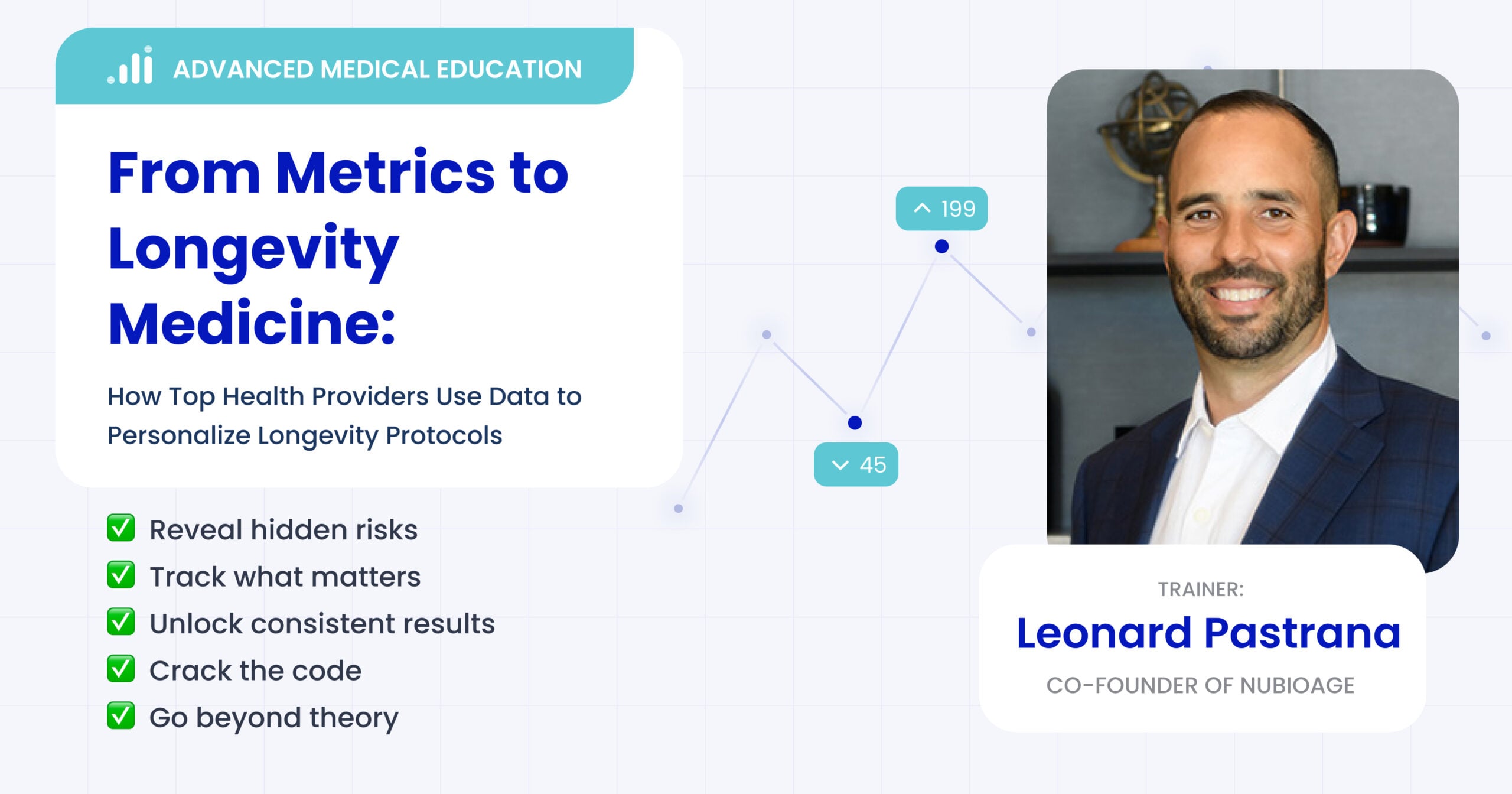
At Heads Up, we recently hosted a live webinar on the top longevity metrics every clinic should be tracking to uncover risks, personalize care, and improve outcomes. Our special guest was Leonard Pastrana, PharmD, co-founder of nuBioAge and a leading educator in longevity medicine who has trained over 5,000 practitioners worldwide.
The Q&A session was packed with insights on biomarkers, testing strategies, and the future of AI in healthcare.
Below is a recap of the most important takeaways.
Epigenetic Clocks: Promise and Limitations
Q: What is the latest on the use of epigenetic clocks as biomarkers?
Dr. Pastrana explained that epigenetic clocks are exciting tools that estimate biological age, but they’re still evolving. Data from TrueDiagnostic and other providers show accelerated aging between ages 40–60, matching what clinicians see in practice (brain fog, body composition changes, metabolic decline).
-
Best use: Motivational for patients (“What’s my biological age?”).
-
Limitation: Still not robust enough for clinical decision-making compared to validated metrics like VO₂ max, ApoB, and fasting insulin.
-
Notable metric: Dunedin Pace of Aging (rate of biological aging per year) is one of the most promising markers for clinical use.
The 40–60 Window: Why It’s Critical
Research confirms that between ages 40–60, aging accelerates. This is also when early insulin resistance can drive vascular damage leading to Alzheimer’s decades later.
Takeaway: This is the “golden window” for clinical intervention. By tracking insulin resistance, ApoB, body composition, and VO₂ max, providers can intervene before irreversible decline.
ApoB vs. ApoB:A1 Ratio
Q: Is the ApoB:A1 ratio more important than ApoB alone?
-
Dr. Pastrana: ApoB remains the gold standard for cardiovascular risk, since it counts atherogenic particles.
-
Ratios can provide nuance, but decisions should be anchored on ApoB levels for clinical accuracy.
Hydration and Protein Preservation
Q: How much water is needed to stop protein degradation?
-
No set number, but generally 2–3 liters/day depending on body weight.
-
What matters: Intracellular water. Low cell volume signals catabolism and accelerates protein breakdown.
-
Solutions: Amino acids, creatine, and osmolites to support intracellular hydration.
Visceral Adipose Tissue (VAT) and Body Fat
Q: Is there a formula for reducing VAT below 1 lb based on body fat percentage?
-
VAT is highly bio-individual. Some lean patients have high VAT, while some obese patients have less than expected.
-
DEXA scans remain the gold standard for assessing VAT.
-
Key: Don’t rely on total body fat % alone — measure directly.
The “Dream Biomarker”: Continuous Fasting Insulin
When asked what biomarker he wished existed, Dr. Pastrana’s answer was clear: A continuous fasting insulin monitor, similar to today’s CGMs.
Why? Because insulin tells us how hard the pancreas is working to maintain glucose balance, and continuous data could revolutionize metabolic care.
GLP-1s and Weight Regain
Q: When should testing be done to predict weight regain after GLP-1 therapy?
-
Always establish baseline metabolic parameters before starting treatment.
-
Key metrics: Resting Metabolic Rate (RMR) and Fat Oxidation (breath testing).
-
Weight regain is often linked to:
-
Reduced metabolism due to caloric restriction.
-
Lean mass loss during weight reduction.
-
-
Solution: Resistance training, protein intake, peptides, and hormone optimization to preserve or rebuild lean mass.
Tirzepatide vs. Semaglutide
Q: Are there significant differences between the two?
-
Clinical differences are minimal.
-
Semaglutide may show slightly better triglyceride/VLDL reduction in studies, but real-world outcomes are similar.
-
Key factors: Patient tolerance and cost.
Affordable Alternatives to DEXA
-
Tools like InBody and SECA devices provide useful trends for lean mass and VAT scores.
-
Not as precise as DEXA, but valuable for monitoring direction over time.
-
Tip: Educate patients not to panic over day-to-day fluctuations (water weight, menstrual cycle, etc.).
HbA1c vs. Fasting Insulin vs. HOMA-IR
-
HbA1c is foundational for diabetes screening but less sensitive in early dysfunction.
-
Fasting Insulin is simple, direct, and highly valuable for detecting early metabolic issues.
-
HOMA-IR combines glucose + insulin for a broader view of insulin resistance.
Recommendation: Use all three, but fasting insulin remains a practical and powerful tool.
Demonstrating True Healthspan Gains
Q: How can clinics prove interventions are reversing biological age?
-
Focus on validated clinical metrics:
-
VAT reduction
-
ApoB lowering
-
VO₂ max improvement
-
Muscle mass gain
-
-
Patient-centered approach: Tie metrics back to personal goals (confidence, energy, longevity with family).
-
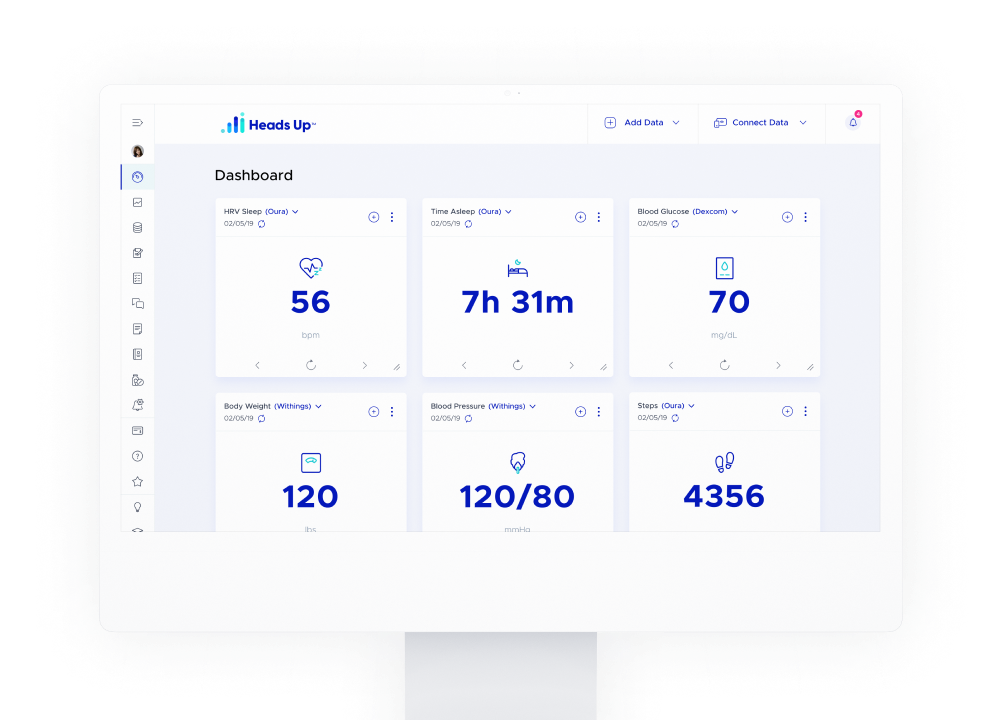
Heads Up enables providers to show before/after dashboards to demonstrate real progress.
Wearables: Tracking Between Lab Visits
-
Body composition scales (weekly trend data).
-
Oura Ring for HRV, sleep quality, recovery.
-
CGM for glucose and metabolic flexibility.
Between labs and DEXAs, these provide daily feedback loops to patients and clinicians.
Custom Longevity Scores
Heads Up now supports custom algorithm development, allowing clinics to combine:
-
Traditional labs (HbA1c, lipids)
-
Advanced markers (epigenetic clocks, VO₂ max, organic acids)
-
Wearables (HRV, sleep, activity)
Result: Proprietary Longevity Scores that differentiate your practice and prove outcomes at scale.
The Future: AI + Longevity Medicine
With Heads Up’s new AI layer, clinicians will soon be able to:
-
Query patient data with natural language.
-
Identify velocity of change across 10+ years of labs.
-
Auto-generate treatment plans based on data trends.
-
Highlight mismatched interventions.
The vision: Secure, HIPAA-compliant AI that turns complex health data into actionable insights in seconds.
Want to see the full clinical longevity training? Click the image below.
Conclusion
Longevity medicine is evolving fast, and the tools to track it are here. From epigenetic clocks to fasting insulin, from VAT scans to custom longevity scores, clinics can now deliver measurable outcomes that extend both lifespan and healthspan.
At Heads Up, we’re helping practices implement these metrics into daily care, unify fragmented data, and prepare for the next generation of AI-powered longevity medicine.
Want to build longevity programs that track, optimize, and prove outcomes? Schedule a Demo with Heads Up.
Tracking Patient Health Data Has Never Been Easier!
Leverage The Power Of Heads Up in your Health Practice
Get started with by scheduling custom demo with one of our specialists to see the difference Heads Up can make in your practice. Schedule your demo and discovery call here.
Optimize Health & Longevity
Synchronize your clients’ medical records, labs, wearables, apps, and more into Heads Up for better outcomes. Sign Up now for a free starter account!

0 Comments